

Franklin Parcel | Will Kogan
Logistics, parcel operations and B2B services | 3-month campaign
A specialist business does not always need a major launch, a celebrity founder or a new product to become relevant to journalists. The strongest media opportunity may be the experience behind what it already does. Franklin Parcel provides software-led parcel auditing, invoice checking and recovery of eligible shipping refunds for businesses using carriers such as UPS and FedEx. It addresses a practical financial and operational problem that business readers understand.
In this case study, we examine the recorded editorial coverage connected with Franklin Parcel, the questions that made the subject useful to editors and the distinction between an ongoing PR programme and individual published articles. The three-month campaign was built around the real questions facing businesses that ship products, manage invoices and control operating costs. The linked source examples include articles recorded over a wider period than the stated campaign and are therefore presented as supporting published examples rather than a claim that every historic article appeared within those three months.
The client and the brief
Franklin Parcel helps businesses identify eligible refunds from UPS and FedEx shipments and keep parcel invoices under control. Its core proposition is practical: shipping costs can be difficult to reconcile, especially for merchants dealing with multiple consignments and regular carrier invoices. The media objective was to introduce that operational expertise to a broader audience of business owners, retailers and finance decision-makers, building third-party credibility without relying on the business itself to be a headline.
The challenge was to find genuine reader value without turning every approach into a description of Franklin Parcel. Journalists generally want an informed answer to their specific question. They may cite the business behind a source, but they are not there simply to reproduce a company's advertising message. That distinction shaped the way this work is explained.
The editorial approach
The campaign widened the subject beyond parcel refunds. Recorded editorial opportunities concerned retail operating costs, supply-chain technology, invoicing, hiring, cybersecurity and changing customer expectations. This let industry publications address their own readers' questions while giving Franklin Parcel relevant expert visibility.
The core idea was to identify several closely related editorial subjects instead of chasing an undifferentiated quantity of mentions. Each subject had to make sense for both the business's expertise and the publication's audience. A national consumer piece, a trade feature and a professional analysis article have different expectations, even where the same organisation can speak to all three.
The coverage archive provides concrete examples of those connections. It does not provide a pitch-by-pitch record of every outreach message, so we are not claiming to know which particular stories came from a press release, a reactive query or an independently initiated journalist request unless a source record explicitly establishes it.
How the media stories worked
Retail operations and fulfilment
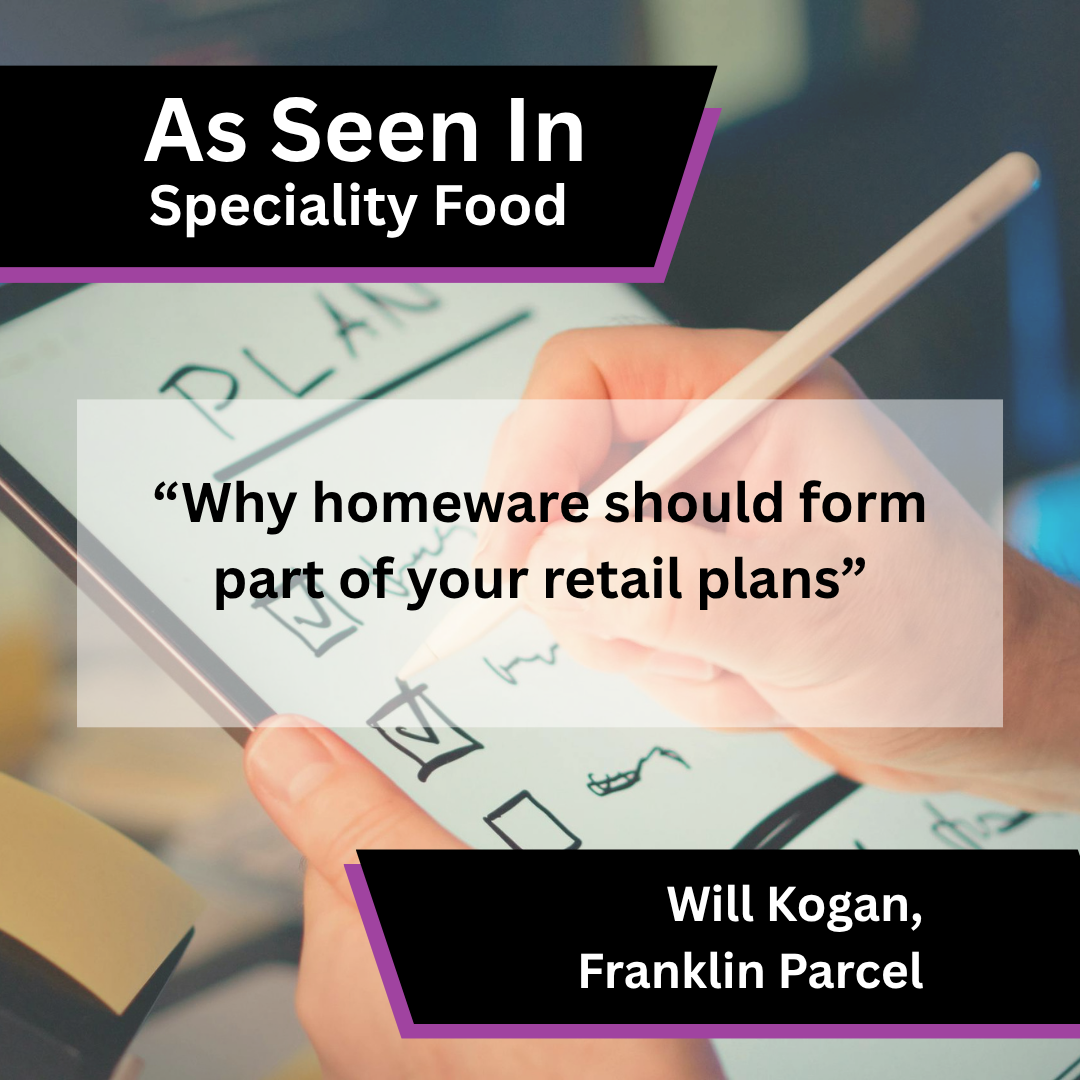
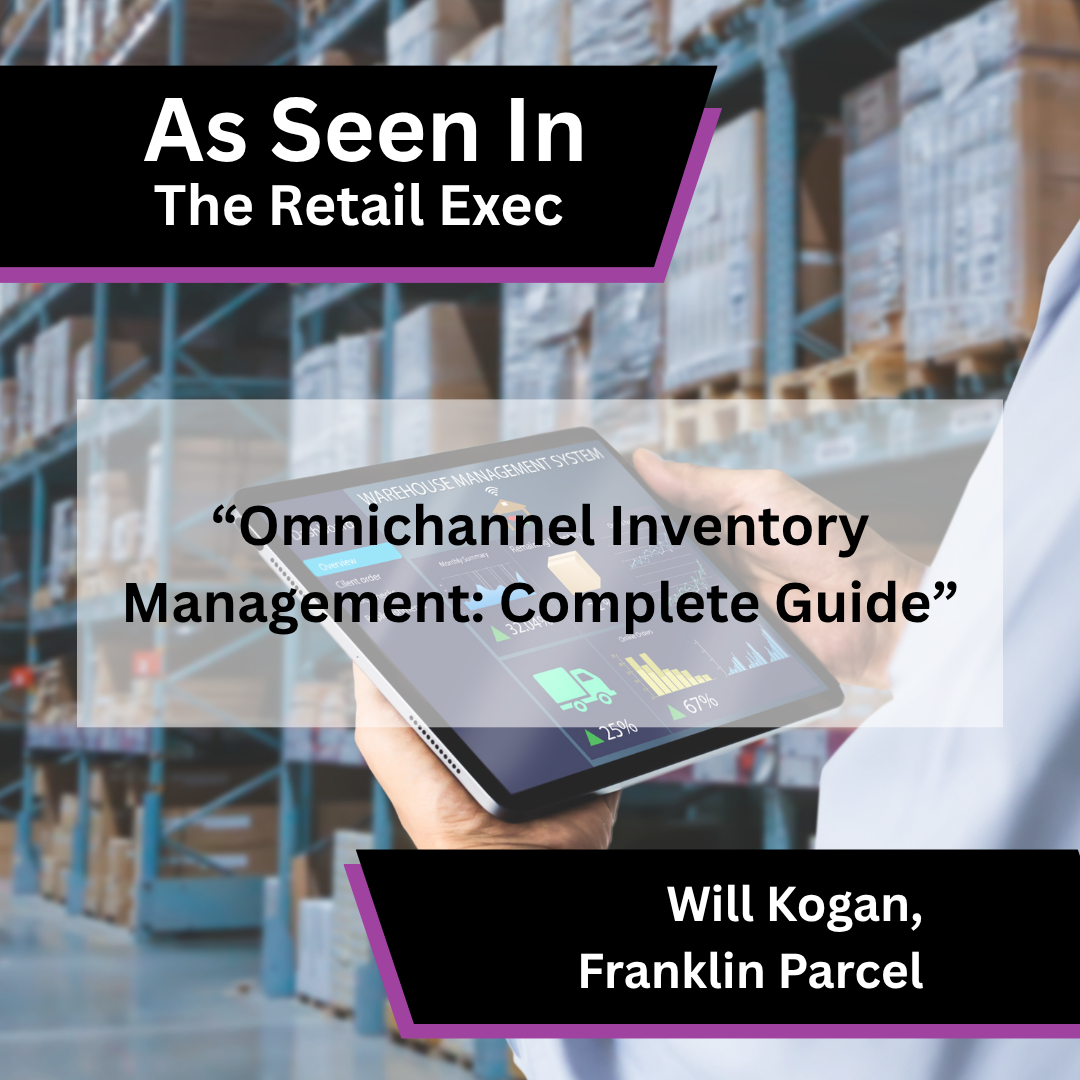
The Retail Exec’s feature on omnichannel inventory management examined a familiar challenge for modern merchants: stock, orders and customer expectations must be coordinated across different channels. Speciality Food’s article on homewares in retail explored how retailers expand their offer while managing the practical implications. For Franklin Parcel, those topics sit close to a business reality it understands: every new product range or channel can create more deliveries, invoices, exceptions and potential unnecessary expense. They provided a credible editorial route into retail operations, not a product advertisement.
Read the Speciality Food feature on Trends in homewares retail market
Read the The Retail Exec feature on Omnichannel inventory management in retail operations and supply chain
Financial accuracy and small-business processes
SmallBusiness.co.uk’s invoicing guide addressed a concrete financial process that can be overlooked by busy sole traders. Financial Accountant’s piece on delegation explored a different, but related question: which responsibilities should be systematised or handed over as a business grows. Franklin Parcel’s relevance to these articles follows from the importance of reliable records, billing accuracy and avoiding administrative leakage. A source need not be a generalist accountant to offer useful insight into the specific operational area it knows.
Read the Financial Accountant feature on Delegation skills and techniques
Read the SmallBusiness.co.uk feature on Creating an invoice for self-employed individuals
Supply chains, risk and technology
Parcel and Postal Technology International’s discussion of cybersecurity in supply-chain logistics brought another dimension to the campaign. Digital shipment records, invoice data and connected systems create operational efficiencies, but organisations must also consider reliability and security. That is a relevant setting for a business working with parcel auditing and carrier billing. The article provides evidence of sector media relevance without claiming Franklin Parcel offers cybersecurity services it does not actually provide.
Read the Parcel and Postal Technology International feature on Cybersecurity in supply chain logistics
Read the The Retail Exec feature on Omnichannel inventory management in retail operations and supply chain
Changing business conditions
Management Today’s coverage of low-cost imports sits within a wider debate about commercial pressure on British businesses. Retail Sector examined changing workforce needs, while Business Quarter looked at the effect of buy-now-pay-later regulation on checkout and retail operations. Their audiences were different, but all were interested in the cost and complexity of doing business. Relevant participation in that discussion gives a specialist logistics business visibility beyond parcel-industry coverage without pretending it is an authority on every part of the economy.
Read the Business Quarter feature on BNPL regulation impacts retail user experience and fintech models
Read the Retail Sector feature on Retailers adapting to workforce shifts and night-time economy
Choosing publications for relevance
The documented media appearances span trade and business publications including Parcel and Postal Technology International, The Retail Exec, SmallBusiness.co.uk, TechRound, Management Today and specialist retail outlets. That range is useful evidence of breadth: some readers are concerned with shipping and fulfilment, others with reducing overheads or improving the reliability of business processes.
The strategy was not simply to chase the largest available audience. The value of a publication depends on how closely the article relates to the business, whether its readers have reason to care about the subject and whether the contribution accurately represents the source. Specialist editorial outlets can provide strong evidence of expertise; national titles can introduce that expertise to a wider public. The two play different roles.
Published results and what they mean
The campaign summary records 13 published articles across the broader business and logistics discussion. Eleven distinct linked editorial examples are included in the accompanying historical coverage table, after duplicate and unsuitable entries have been removed from the source list. It is the individual articles and their subject matter, rather than an unsupported promise about what coverage must deliver, that make the results useful to prospective clients.
Of the reported articles, seven carried links to the business, comprising four followed links and three marked nofollow. The mix reflects the fact that publishers determine their own editorial linking policies. The campaign account also records that Franklin Parcel’s Ahrefs Domain Rating rose from 4 to 11 during the period. That is an observed movement in a third-party SEO metric, not proof that individual articles caused the change, and Domain Rating is not itself a Google ranking factor.
| Publication | Date | Editorial subject | Article |
|---|---|---|---|
| Parcel and Postal Technology International | 2025-09-16 | Cybersecurity in supply chain logistics | Read article |
| Speciality Food | 2025-08-12 | Trends in homewares retail market | Read article |
| The Retail Exec | 2025-06-20 | Omnichannel inventory management in retail operations and supply chain | Read article |
| Business Quarter | 2025-05-28 | BNPL regulation impacts retail user experience and fintech models | Read article |
| Financial Accountant | 2025-05-22 | Delegation skills and techniques | Read article |
| SmallBusiness.co.uk | 2025-05-20 | Creating an invoice for self-employed individuals | Read article |
| Management Today | 2025-05-15 | Trump's point about overconsumption | Read article |
| TechRound | 2025-04-25 | Is blockchain the future of digital payment systems | Read article |
| Retail Sector | 2025-04-24 | Retailers adapting to workforce shifts and night-time economy | Read article |
| Advnture | 2025-04-12 | Trump's trade tariffs impact on outdoor brands | Read article |
| TechRound | 2025-04-04 | UK Scale-up Visa suitability for businesses | Read article |
Images from the coverage




What the campaign demonstrates
The campaign brought a technical service into stories about business finances, retail decisions, logistics and operational technology. In parallel, the campaign account records a higher Ahrefs Domain Rating at the end than at the start. Both are worth noting, but they describe different things: one is published editorial activity, and the other is a proprietary measure of a website’s backlink profile. Neither alone proves increased search rankings, enquiries or turnover.
Specialist logistics services compete on trust as well as functionality. Relevant editorial references can make a technical offering easier to encounter and assess, even when the company itself is not the subject of a feature.
There is an important distinction between securing a credible article and promising a particular commercial effect. The articles provide independently published references to Franklin Parcel and its area of expertise. They do not, without separate measurement, prove enquiries, turnover, backlinks, ranking improvements or future outcomes.
Results at a glance
| Result | Details |
|---|---|
| Client | Franklin Parcel |
| Campaign period | 3-month campaign |
| PR focus | Logistics, parcel operations and B2B services |
| Documented coverage | 11 individually linked archive articles; the separate campaign report records 13 published articles. |
| Published articles in campaign report | 13, as recorded in the supplied report; not an independently counted set of 13 hyperlinks |
Frequently asked questions
Can technical B2B services benefit from earned media?
Yes. Journalists covering retail, logistics, finance and technology often seek informed explanations of operational problems.
Does a Domain Rating increase prove a PR campaign drove rankings?
No. Domain Rating is an Ahrefs metric, not a Google ranking factor, and several variables can affect it. This case study reports a contemporaneous change without claiming sole causation.
Does every article need to focus on the company's product?
No. A retailer reading about stock management or a founder reading about invoice accuracy may find genuine operational expertise useful without needing a feature devoted to parcel refunds.
What is the value of a link in a published article?
A link can give readers a direct route to learn about a business and may contribute to the wider backlink profile. Its search implications depend on context, how the publisher marks it and many factors beyond the PR campaign; neither a link nor a higher Ahrefs score guarantees a ranking improvement.
Related services and further reading
Could your expertise make a useful media story?
Fair Public Relations helps founders, specialists and businesses identify the issues on which they can contribute credible insight. We start with what readers and journalists actually need, then assess which parts of a company's experience, products or services have genuine editorial potential. Every campaign is shaped around fit and realistic expectations; publication is always an editorial decision.
