

Chiefjob.com | Simon Fabb
Executive recruitment and business leadership | 3-month campaign
A specialist business does not always need a major launch, a celebrity founder or a new product to become relevant to journalists. The strongest media opportunity may be the experience behind what it already does. ChiefJobs.com is an executive recruitment and C-suite jobs platform connecting employers with senior candidates. Its focus on leadership careers gives it a natural perspective on hiring, management, qualifications and evolving expectations of executives.
In this case study, we examine the recorded editorial coverage connected with ChiefJobs.com, the questions that made the subject useful to editors and the distinction between an ongoing PR programme and individual published articles. The campaign ran for three months. The recorded articles cover a period from June to September 2025 and show how the same recruitment viewpoint can reach readers facing very different career and leadership decisions.
The client and the brief
ChiefJobs.com is a specialist platform connecting organisations with executive and C-suite candidates. It operates where decisions about hiring, leadership skills and career progression matter commercially. The media brief was to establish the platform as a relevant voice on those questions beyond its own listings, using the experience of senior recruitment to address employers, leaders and people considering their next move.
The challenge was to find genuine reader value without turning every approach into a description of ChiefJobs.com. Journalists generally want an informed answer to their specific question. They may cite the business behind a source, but they are not there simply to reproduce a company's advertising message. That distinction shaped the way this work is explained.
The editorial approach
Rather than depend on announcing vacancies or new website features, the editorial approach focused on the decisions employers and candidates face: how to hire well, how skills are assessed, what qualifications mean, and how market changes affect leadership careers.
The core idea was to identify several closely related editorial subjects instead of chasing an undifferentiated quantity of mentions. Each subject had to make sense for both the business's expertise and the publication's audience. A national consumer piece, a trade feature and a professional analysis article have different expectations, even where the same organisation can speak to all three.
The coverage archive provides concrete examples of those connections. It does not provide a pitch-by-pitch record of every outreach message, so we are not claiming to know which particular stories came from a press release, a reactive query or an independently initiated journalist request unless a source record explicitly establishes it.
How the media stories worked
Executive skills in a changing workplace
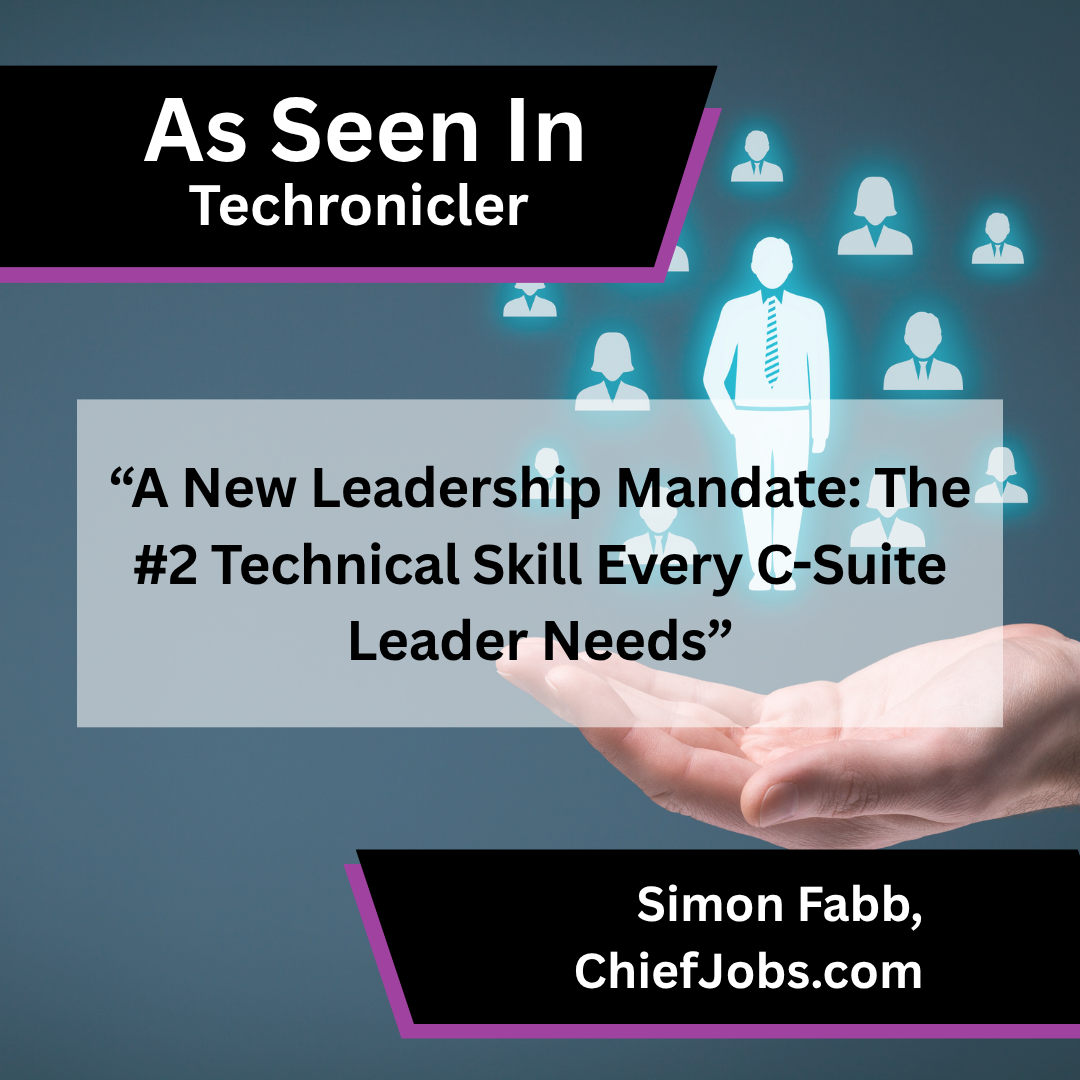
The Techronicler piece asked whether a leader’s ability to work with artificial intelligence now matters alongside more established technical skills. That is a more interesting editorial question than how many senior vacancies a platform carries. It explores the criteria organisations might use when choosing executives and what those expectations mean for candidates. ChiefJobs.com’s relevance lay in its closeness to the market for senior roles, where hiring decisions bring together experience, judgement and adaptability.
Read the Techronicler feature on C-suite hard skill secondary to AI
Trust, recruitment technology and the hiring process
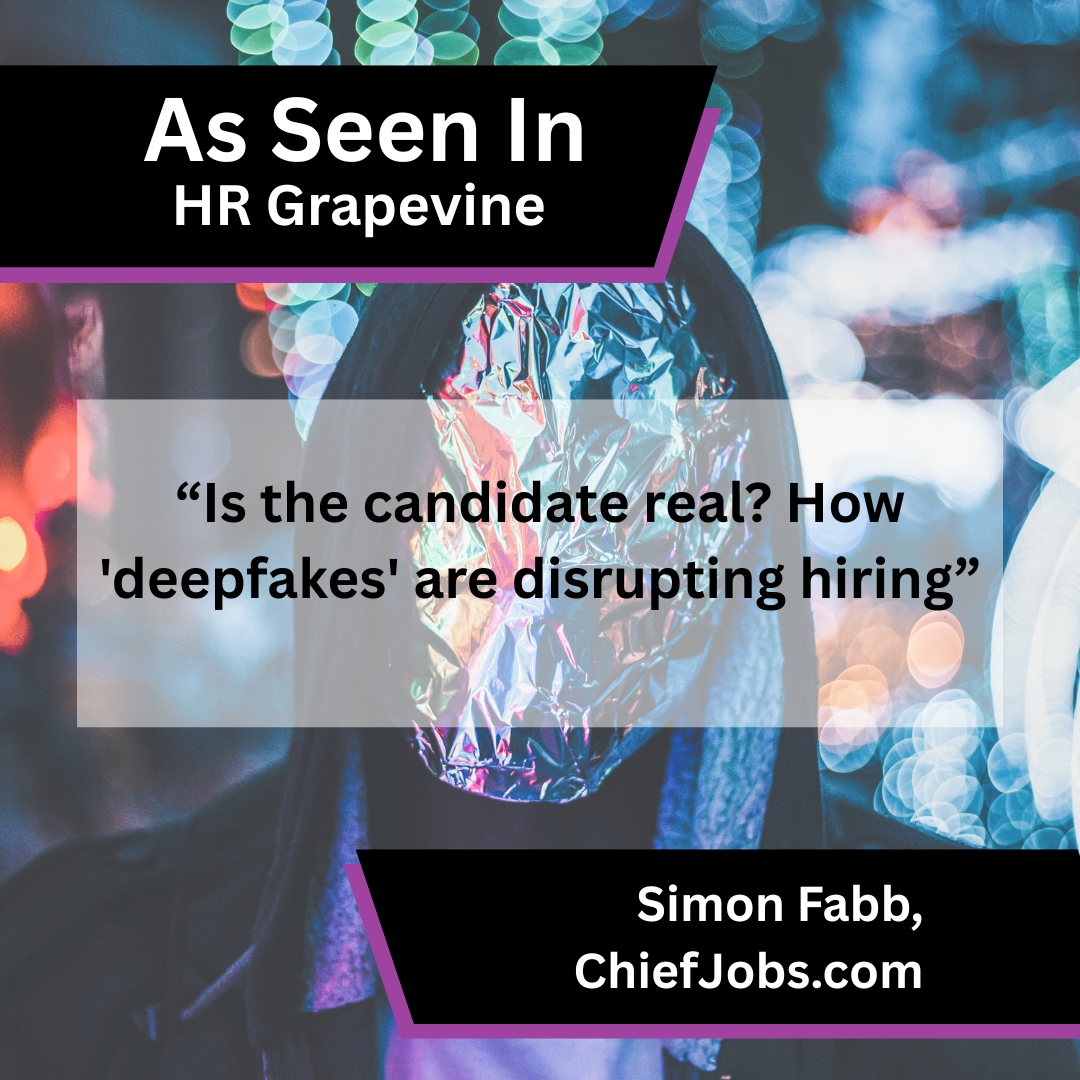
HR Grapevine’s article on deepfake candidates dealt with a new challenge to trust in recruitment: technology can make an applicant’s identity or presentation harder to verify. For an executive recruitment platform, the question connects directly to employer confidence and the integrity of the hiring process. Its editorial value is also distinct from broader discussions of AI productivity. It asks how recruiters should think about evidence, verification and the risks of relying on appearances.
Read the HR Grapevine feature on Deepfake job candidates and government pay transparency proposals
Mainstream careers coverage
The Daily Telegraph’s article on degrees with strong employment prospects and The Sun’s comparison of graduate salaries reached readers well beyond the C-suite. Both address a familiar decision: which qualifications are worth pursuing and how education relates to future work. They offered an opportunity for a recruitment viewpoint to add context, without claiming that a qualification alone guarantees a job or a particular salary. That breadth helped position ChiefJobs.com in careers journalism as well as executive business coverage.
Read the The Daily Telegraph feature on Most employable degrees in the UK
Read the The Sun feature on Best and worst degrees for higher salary analysis
Business culture, leadership and people decisions
The Money Marketing discussion of company culture appealed to professionals comparing prospective employers, while Intelligent CISO explored imposter syndrome among senior leaders. Business Quarter examined the potential downsides of a hiring freeze. These are three different stages of the talent question: attracting people, supporting them in leadership roles and deciding when to recruit. Together they show why a senior recruitment source can contribute to wider organisational debates, not just the immediate act of placing a candidate.
Read the Money Marketing feature on Importance of company culture in financial advice jobs
Read the Intelligent CISO feature on CXOs' strategies for dealing with imposter syndrome
Read the Business Quarter feature on Hiring freezes could be counterproductive
Choosing publications for relevance
The documented articles appeared across specialist recruitment and business outlets, including HR Grapevine, Money Marketing and Intelligent CISO, alongside national titles such as the Daily Telegraph and The Sun. That spread matters because a hiring executive and a graduate weighing career options are not looking for the same advice. The common thread is a credible understanding of recruitment, expressed in language appropriate to each audience.
The strategy was not simply to chase the largest available audience. The value of a publication depends on how closely the article relates to the business, whether its readers have reason to care about the subject and whether the contribution accurately represents the source. Specialist editorial outlets can provide strong evidence of expertise; national titles can introduce that expertise to a wider public. The two play different roles.
Published results and what they mean
The recorded three-month campaign is supported by nine distinct linked article examples on recruitment, careers and leadership. Those articles are individually listed below so readers can see the subject matter, publication and original source rather than taking a bare volume claim on trust. The range of topics is at least as important as the total number of appearances.
The available record establishes published editorial coverage, not a measured change in applications, vacancies filled, platform sign-ups or revenue. Those commercial outcomes would require separate evidence.
| Publication | Date | Editorial subject | Article |
|---|---|---|---|
| Techronicler | 2025-09-05 | C-suite hard skill secondary to AI | Read article |
| Money Marketing | 2025-08-05 | Importance of company culture in financial advice jobs | Read article |
| HR Grapevine | 2025-07-29 | Deepfake job candidates and government pay transparency proposals | Read article |
| Intelligent CISO | 2025-07-07 | CXOs' strategies for dealing with imposter syndrome | Read article |
| Business Quarter | 2025-07-07 | Hiring freezes could be counterproductive | Read article |
| The Daily Telegraph | 2025-06-20 | Most employable degrees in the UK | Read article |
| The Sun | 2025-06-20 | Best and worst degrees for higher salary analysis | Read article |
| HR Spotlight | 2025-06-11 | Steps to rebuild employee trust in the workplace | Read article |
| Chartered Institute of Marketing | 2025-06-11 | Ethical marketing involves promoting products honestly and responsibly | Read article |
Images from the coverage







What the campaign demonstrates
The range of recorded coverage illustrates how a specialist recruitment platform can be relevant to both national consumer career journalism and B2B leadership publications. Those are complementary forms of authority rather than interchangeable audiences.
A job board is a service. Its founders and team can nonetheless be useful editorial sources when they have relevant insight into the labour market, hiring and leadership decisions. The case study is about that media fit, not a guarantee of applications or employer enquiries.
There is an important distinction between securing a credible article and promising a particular commercial effect. The articles provide independently published references to ChiefJobs.com and its area of expertise. They do not, without separate measurement, prove enquiries, turnover, backlinks, ranking improvements or future outcomes.
Results at a glance
| Result | Details |
|---|---|
| Client | ChiefJobs.com |
| Campaign period | 3-month campaign |
| PR focus | Executive recruitment and business leadership |
| Documented coverage | 9 individually linked editorial examples; refer to the dated article table above. |
Frequently asked questions
Can a recruitment platform secure coverage without job-board announcements?
Yes. Hiring trends, qualifications, employee expectations and leadership skills can create genuine editorial opportunities for a suitably qualified source.
Why approach both national and trade media?
National careers features reach a wide audience, while specialist titles serve decision-makers and HR professionals. The right mix depends on the client's actual objectives.
Do these articles show increased applications?
No. The documented result is published coverage. Changes in applications, employer enquiries or revenue would need separate measurement.
What makes an executive recruitment source useful to a journalist?
A grounded understanding of hiring decisions, expectations of senior candidates, organisational culture and emerging recruitment risks. The commentary needs to answer the journalist’s question, not simply promote an available vacancy.
Related services and further reading
Could your expertise make a useful media story?
Fair Public Relations helps founders, specialists and businesses identify the issues on which they can contribute credible insight. We start with what readers and journalists actually need, then assess which parts of a company's experience, products or services have genuine editorial potential. Every campaign is shaped around fit and realistic expectations; publication is always an editorial decision.
