
Electric England | two-month PR engagement
Five historical article links, including verified founder and scooter safety coverage
Electric England's historical press records illustrate how a relatively young electric-transport business could become relevant to journalists through several types of story. The archive lists five linked editorial appearances and one additional incomplete source record. The linked pieces range from national celebrity photography involving electric scooters to a local debate about safety policy, a substantial profile of founder Gordon Riley and a national article about electric bikes.
The account owner confirms a two-month PR engagement. The linked archive dates run from 29 April to 25 July 2022, which is longer than two months. We therefore describe the two-month engagement separately from the wider historical coverage window and do not claim that every recorded article appeared within precise two-month contractual dates.
The record also requires careful distinction between an article about the client and publicity in which a client's product may have been present. The original published Milton Keynes Citizen and Yorkshire Post articles name Gordon Riley and Electric England, while some celebrity scooter and national electric-bike entries require the original archived press images to establish precise brand attribution. This case study treats those as recorded source links and does not invent quotations or editorial endorsement.
The client and the founder's real story
Electric England was an electric scooter and electric bike business connected with Sheffield entrepreneur Gordon Riley. Contemporary publisher reporting describes him as a founder with a strong interest in making electric mobility safer, improving rider education and engaging with discussions about regulation and public infrastructure. The business's story was not limited to a product catalogue. It also involved a particular perspective on how new transport forms could fit into everyday life and how riders could be taught to use them responsibly.
The Yorkshire Post described Gordon's personal experience after a serious workplace head injury and a subsequent heart attack, followed by a long period of rehabilitation and the development of his business interests. That material is a real-life story, and it needs sensitive treatment. The account is based on the founder's own public description, not a clinical finding that entrepreneurship reverses neurological damage or treats mental-health conditions.
For a business with a distinctive founder, the editorial opportunity can be wider than a launch announcement. News may arise from a social issue the business understands, a founder's lived experience, a public discussion about products or the use of those products in an unexpected context.
1. Public debate about rider safety and the rules of electric transport
In June 2022, the Milton Keynes Citizen reported proposals from Electric England's Gordon Riley for rules governing the use of e-scooters. He spoke as the leader of a business working with electric transport, discussing education, rider responsibility, visibility and possible restrictions on riding after dark.
The value of this article was its relevance to a live public policy debate at the time. As new mobility products attracted more attention, journalists needed knowledgeable voices who could explain practical questions about rider behaviour and how roads and public spaces might accommodate scooters.
It is important not to recycle that discussion as current legal advice. UK e-scooter rules can change, and the interview is a historical snapshot of Riley's views in 2022. We do not claim that the proposed rules became law, that the company controlled government policy or that the source authorises riding privately owned scooters on public roads today.
This is a useful form of expert PR for a product-led business: contribute informed comment on a subject that affects users and the wider public, rather than insisting the story simply promote a particular scooter model.
2. The founder's personal experience gave the business a human dimension
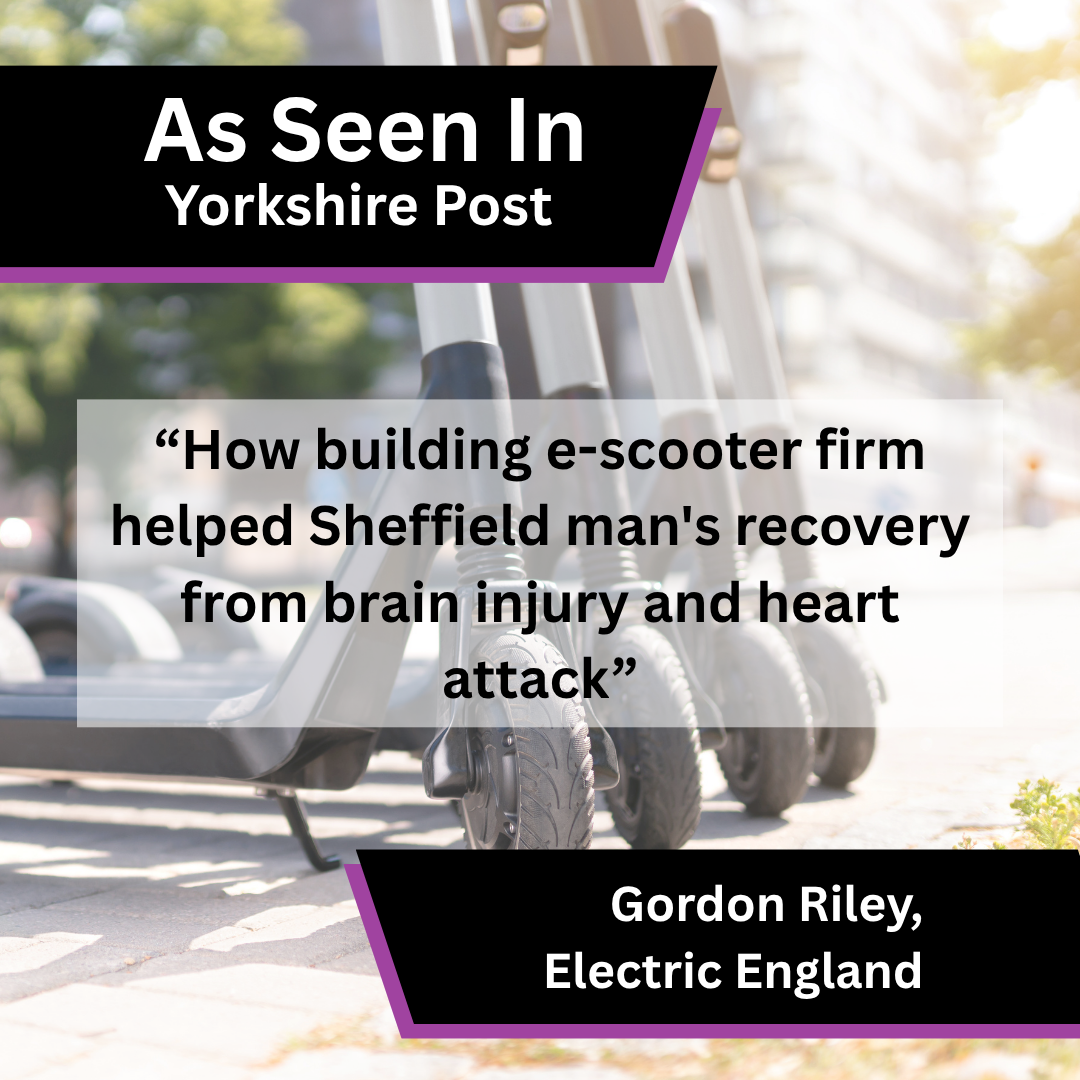
The Yorkshire Post published a longer feature about Gordon Riley's experience recovering and rebuilding his working life after serious health challenges. The story connected the development of his electric-transport businesses with his account of finding a renewed sense of purpose. It named Electric England and discussed the aims of promoting safety and responsible transport.
This is distinct from the policy commentary. Here the editorial centre of gravity was the person behind the business and the emotional reality of starting again after life-changing setbacks. That kind of coverage can give readers a more complete picture of why a founder cares about a particular industry and what experiences inform their public contributions.
The story is meaningful without any exaggerated health claim. The reporter described the founder's account of his own recovery journey; the publication does not establish that starting an e-scooter company caused a medical recovery or would do so for anyone else. Nor do we suggest it is representative of all people with brain injuries.
For other founders, the lesson is that a personal history can sometimes provide a genuine reason for coverage. It must be shared with consent, told accurately and connected to the story without becoming an invented tale of instant transformation.
3. Electric scooters appearing in national celebrity coverage
The archive also holds two Daily Mail URLs dated April and May 2022 showing broadcaster and personality Lizzie Cundy using an electric scooter. These articles are different from interviews about transport policy or business history. Their editorial subject was a celebrity appearance in London, with an electric scooter as a visible part of the scene.
For a consumer brand, a product's presence in a widely viewed editorial image can be valuable evidence of public visibility, but a case study must be precise about what can actually be proved. The two URLs and source-image links are genuine archived references associated with Electric England. The live pages were not independently readable in this review, and the original press imagery still needs to be checked to establish that the scooter was identifiable as the client's product and whether the publication named the business.
Accordingly, we do not assert that the Daily Mail endorsed Electric England, provided a direct branded backlink or interviewed its founder in those two stories. If the source screenshots demonstrate only an unbranded scooter, the link can remain in the historical record without being presented as an attributable brand placement. This is a clear example of why proof-based PR reporting matters more than a superficially large total.
4. Reaching a wider transport and lifestyle readership
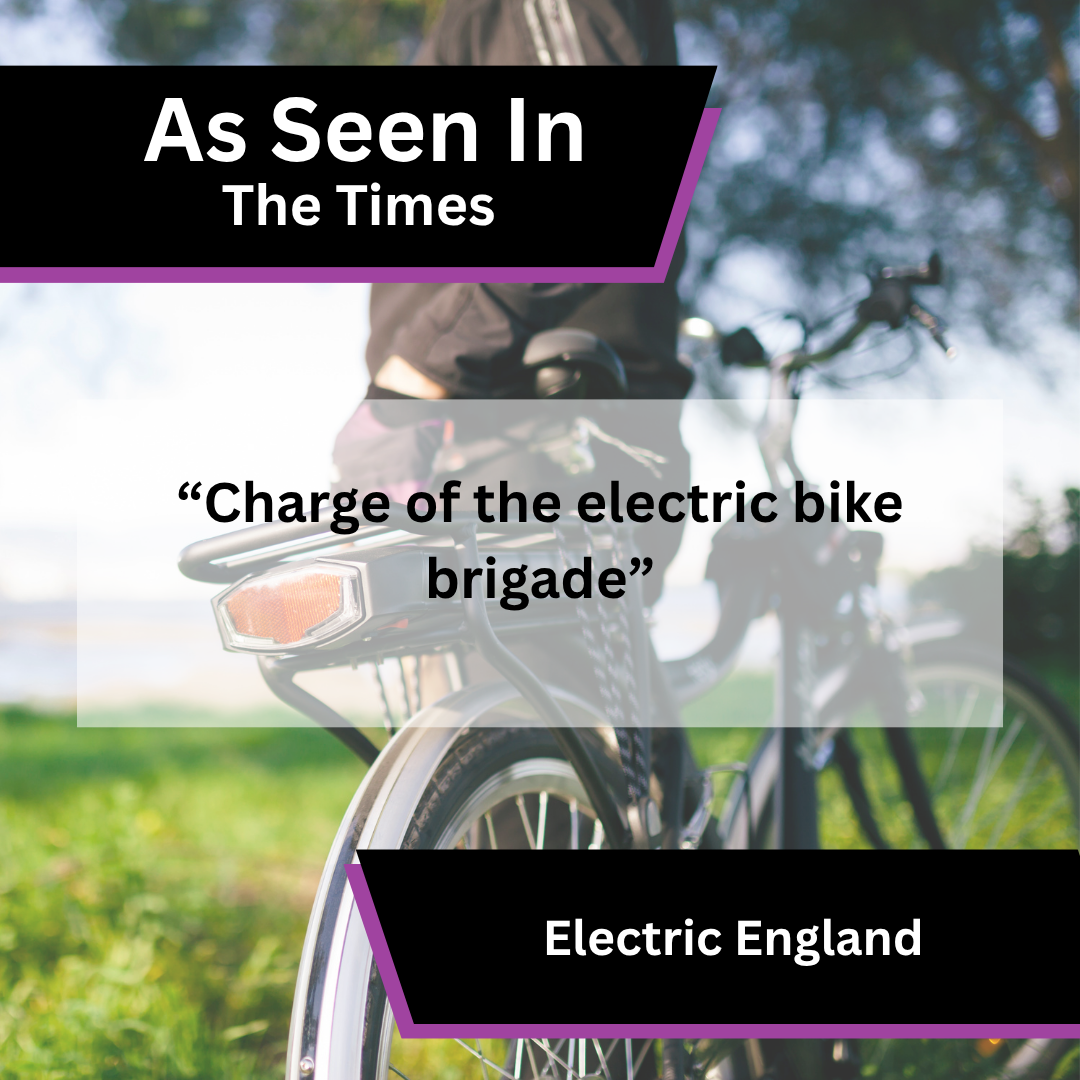
A July 2022 record links to The Times feature 'Charge of the electric bike brigade'. The subject sits naturally alongside an electric mobility business, but the publisher's paywall means the current public article text was not independently examined in this pass. The saved original press image must be checked to confirm the precise role, quote or product mention associated with Electric England.
Even if the original credit is confirmed, an e-bike editorial feature is not the same type of opportunity as a scooter safety interview. It reaches an audience interested in transport trends, everyday mobility or changing consumer technology rather than the details of a specific local proposal. The range of subjects shows why a specialist company could have more than one plausible editorial pitch.
The source archive also contains a sixth record on the same day as the first Daily Mail story, described only as a Lizzie Cundy e-scooter segment. That record has no publisher, article URL or evidence-image field. It is not counted as an independently verified sixth published placement, nor is a television appearance claimed from it. It remains in the internal archive for potential future verification.
What the linked records support, and what they do not
The supplied Published Press view lists six source rows, of which five carry published URLs and five have original press-image links. Two articles are directly verified as naming Electric England and Gordon Riley: Milton Keynes Citizen and Yorkshire Post. Two are Daily Mail celebrity pieces linked by the archive to the brand but requiring screenshot-level proof of brand identity; the fifth is a Times feature requiring original quote or product attribution confirmation. One further archive row is incomplete and not counted as published coverage.
The stated two-month engagement is confirmed separately from the April-to-July span of the article records. No claim is made that all five linked references fell inside a verified contractual two-month window. No claimed sales, bookings, traffic, new customers, search ranking changes or specific audience reach can be traced to this source alone.
The practical lesson is that an authentic business can have several distinct editorial assets: a spokesperson with relevant policy knowledge, a distinctive founder story and, where independently attributable, consumer-product imagery. Different story types can help a journalist answer different questions. Each needs an appropriate level of evidence and honest attribution.
Published media coverage
| Publisher | Archived date | Linked article |
|---|---|---|
| Daily Mail | 2022-04-29 | Lizzie Cundy pictured using an electric scooter on a London visit |
| Daily Mail | 2022-05-06 | Lizzie Cundy rides an electric scooter through London traffic |
| Milton Keynes Citizen | 2022-06-15 | Expert calls for restrictions on e-scooter riding after dark |
| Yorkshire Post | 2022-07-06 | How building an e-scooter firm supported one founder's recovery journey |
| The Times | 2022-07-25 | Charge of the electric bike brigade |
Images from the coverage
Campaign details
| Result | Details |
|---|---|
| Client | Electric England, electric scooter/e-bike venture associated with Gordon Riley |
| Confirmed PR engagement | Two months; exact contract dates not in source |
| Historical source rows | Six; five with linked article URLs and one unverified/unlinked segment record |
| Articles directly verified naming client | Milton Keynes Citizen and Yorkshire Post |
| Other three linked publisher URLs | Two Daily Mail celebrity scooter articles and one Times electric-bike feature requiring brand-proof review |
| Archived dates | 29 April to 25 July 2022, broader than contracted length |
| Themes | Scooter safety commentary, founder real-life story, consumer transport visibility |
| Claims excluded | No six verified appearances, TV segment, medical cure, sales, backlinks or exact in-contract total |
Frequently asked questions
How long was the Electric England PR engagement?
Two months, confirmed by the account owner. The historical publication links range from April to July 2022 and are not presented as a precise contract window.
How many media records are in the source?
There are six archive rows, five with published article URLs. The remaining unlinked row is not counted as verified additional coverage.
Which coverage clearly names Electric England?
The source-linked Milton Keynes Citizen policy article and Yorkshire Post founder feature do. Brand attribution in the Daily Mail image stories and The Times record needs original press-proof verification before being represented as branded coverage.
Did the case study establish increased product sales or medical recovery through business activity?
No. It documents public journalism and a founder's own reported experience. Neither new product sales nor a health outcome caused by entrepreneurship is independently established.
Explore founder and consumer mobility PR
PR for a transport technology or consumer business is not limited to product launches. Genuine operator knowledge, relevant public-safety debates and the founder's own experience may each provide a reason for editorial interest. Fair PR develops those angles with appropriate accuracy and respect for the people involved.
Learn more about Technology PR, Founders PR and Real-Life Stories. To discuss your own brief, visit Contact Fair PR.
