

Bloc app | 12-month engagement
Social events and consumer app PR
A consumer app competes for attention in a crowded market, and simply announcing that it exists is seldom enough to make a compelling news article. The more useful question is what the product connects to in everyday life: how people meet, what they spend on nights out, the challenges they experience and the perspectives the people behind a business can offer.
Bloc is a social-events and venue-discovery app associated with founder Josh Wood. Its public positioning centres on helping people connect around real-world venues and events, while providing incentives to participate. The PR archive shows the company appearing in consumer real-life stories and lifestyle coverage, alongside business and technology commentary attributed to Josh.
It has confirmed a 12-month PR engagement. There are 14 historical record source entries from January 2022 through June 2023, a longer time span than the contracted year. They include related stories and republications, and therefore should not all be presented as 14 distinct ideas generated during one precisely defined twelve-month window.
The opportunity: make an app relevant beyond the app store
For consumer technology products, the most obvious pitch may be an explanation of the product's features. A journalist, however, may be interested in something broader: a person with an unusual experience, a trend affecting real social behaviour or a founder who has learned something from running the company.
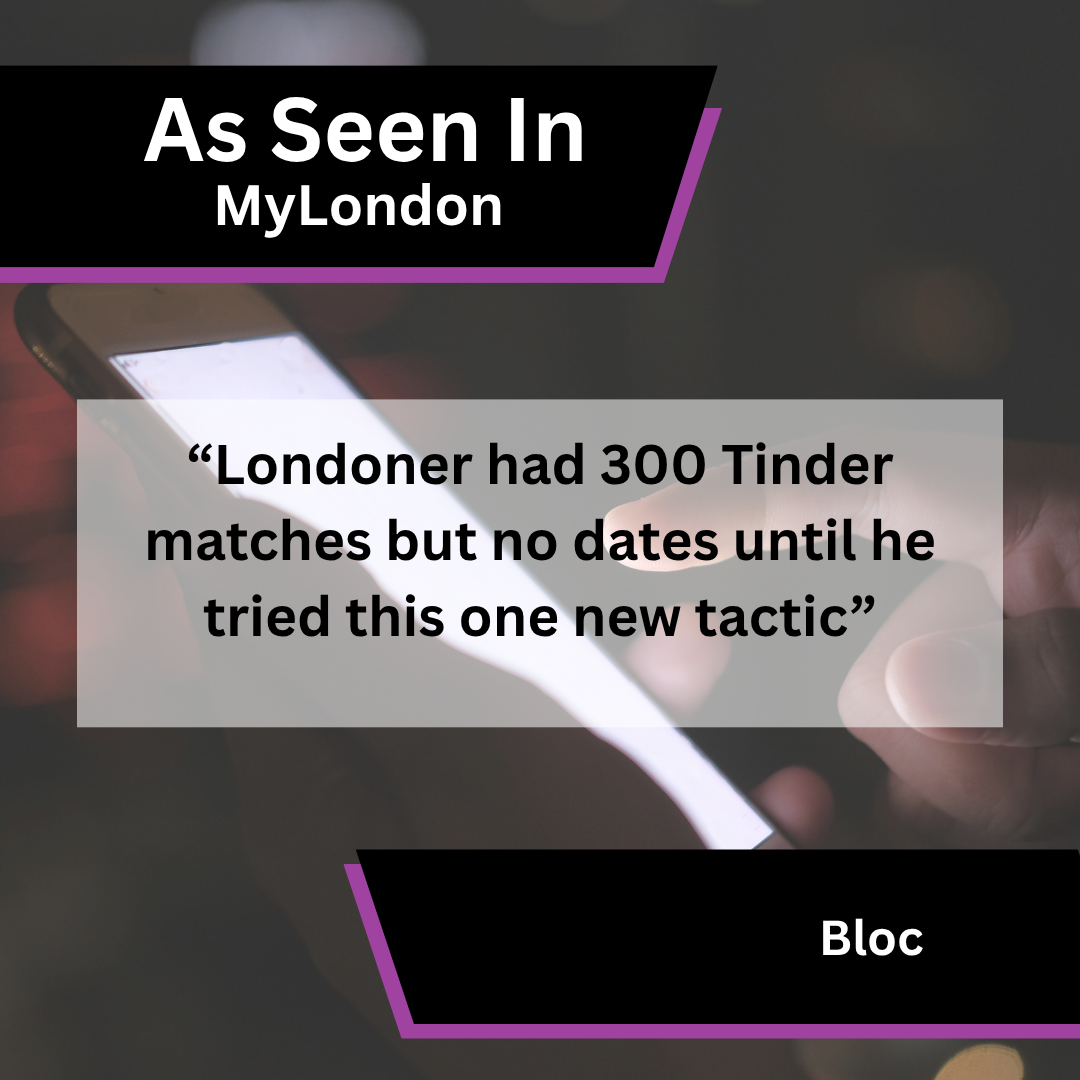
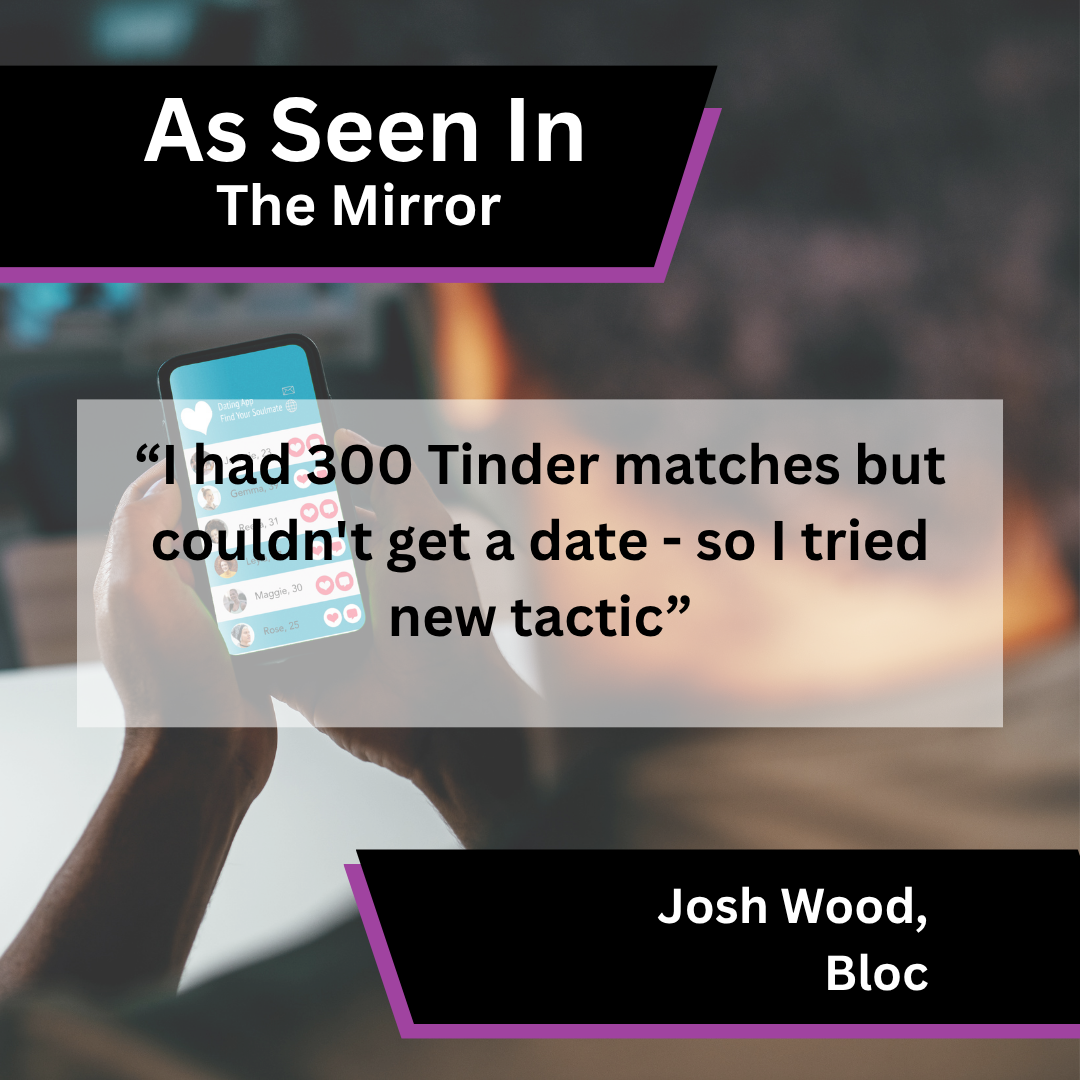
Bloc's archive includes each of those possibilities. Its strongest consumer story concerned the frustration of accumulating hundreds of dating-app matches without securing a date. Other articles considered extra ways people might earn money, the cost of leisure and the experience of founding a social technology company.
That spread suggests several legitimate editorial contexts for the business. It does not mean every article was an independently originated campaign, nor that the app's commercial performance can be inferred from publicity alone.
The dating story: from frustration to real-world connection
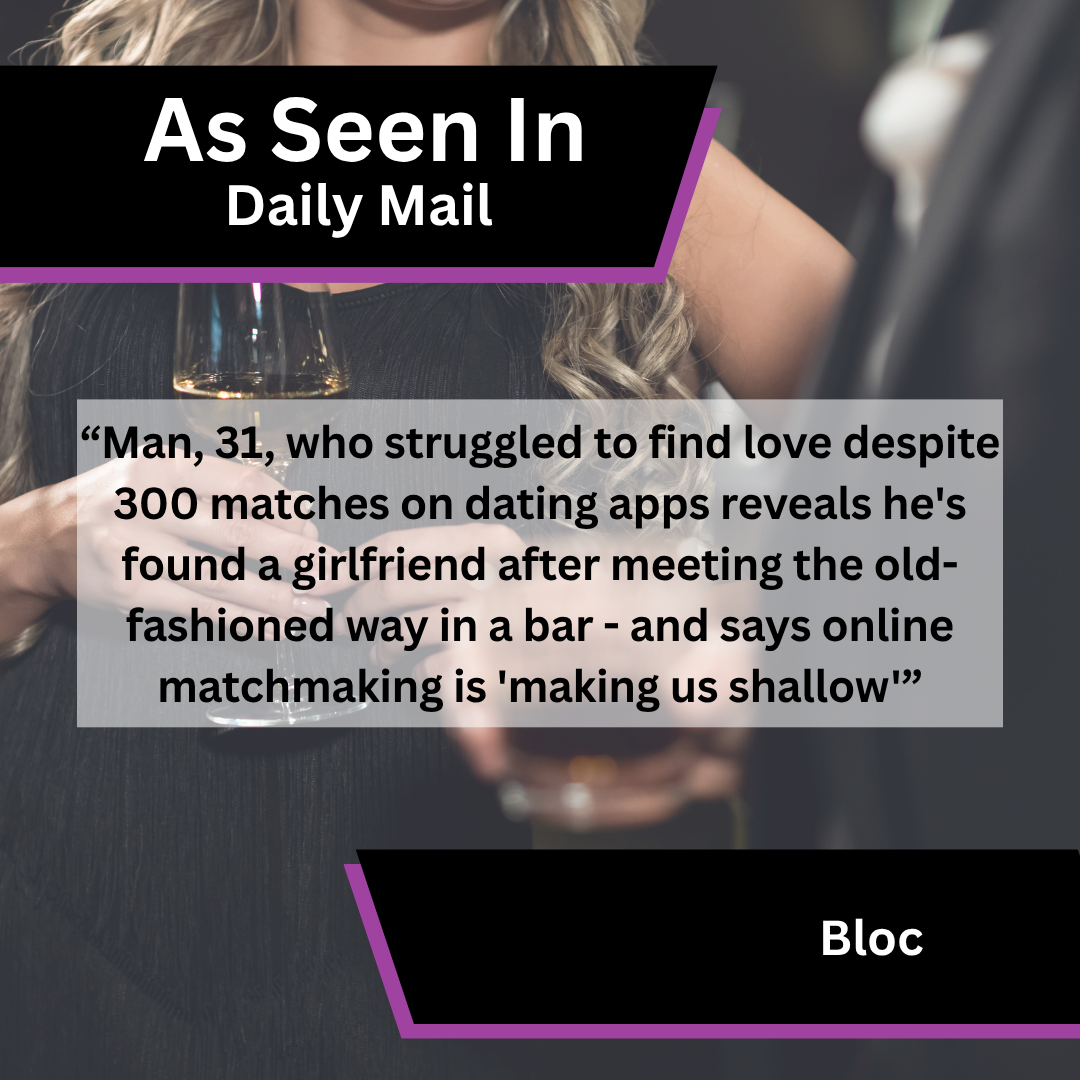
In January 2022, a consumer story about somebody receiving 300 Tinder matches without a successful date appeared in several publications. The Mirror ran a real-life feature about trying a different approach. MyLondon published a related London-focused article. Daily Mail also reported the man's experience and the argument that meeting in person could offer something missing from online swiping.
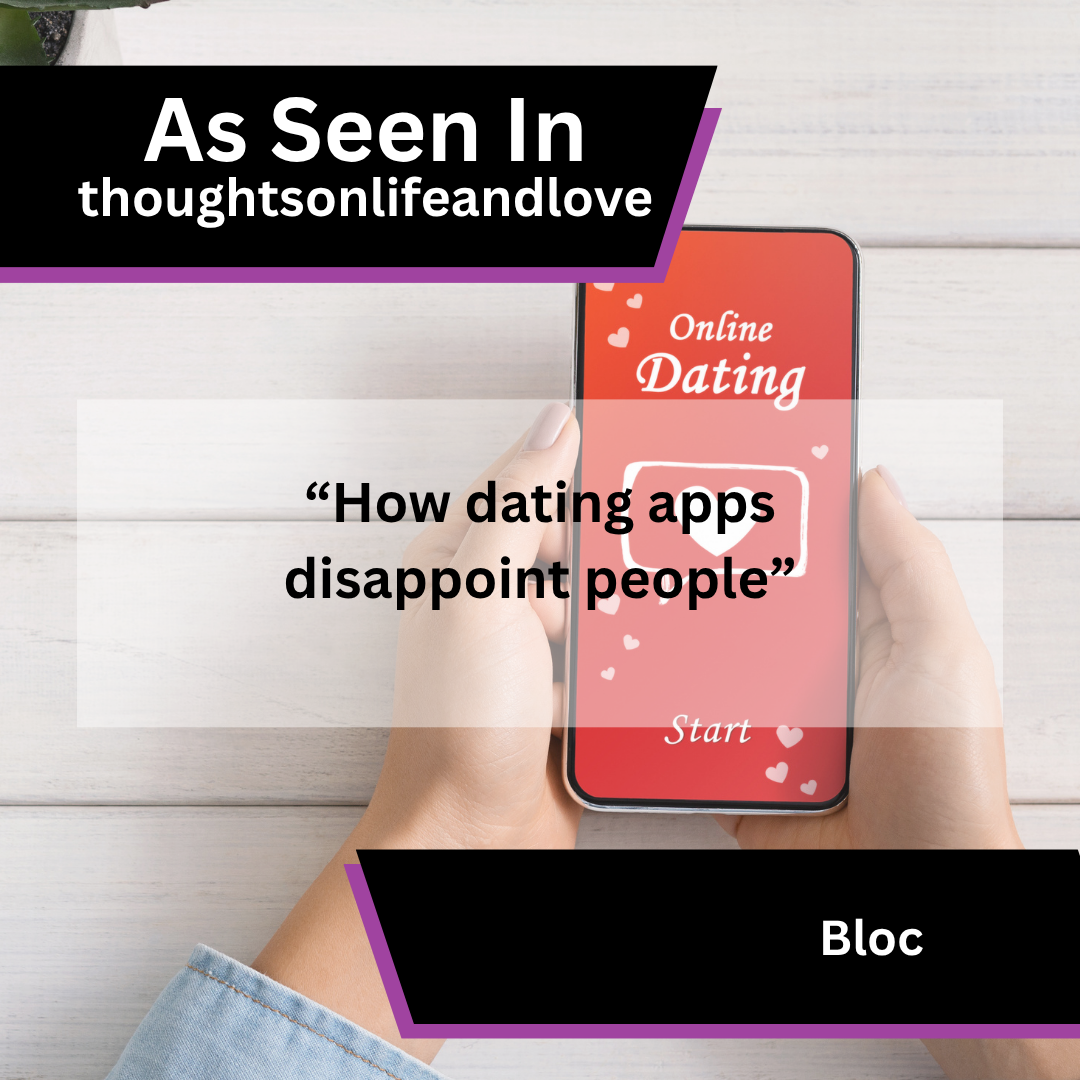
The archived source additionally records an article from Thoughts on Life and Love discussing the disappointment some people experience with dating apps.
These are four published source records connected to a substantially overlapping story, not four unrelated campaign concepts. The angle worked as a human-interest narrative: the reader encounters an individual problem and a recognisable social habit before meeting the product and business connected to the subject.
For a venue and events app, that connection is relevant. It explores the difference between digital interaction and physical socialising, without needing to claim that an app guarantees a relationship or helps everyone find a date.
A consumer technology angle built around the cost of living
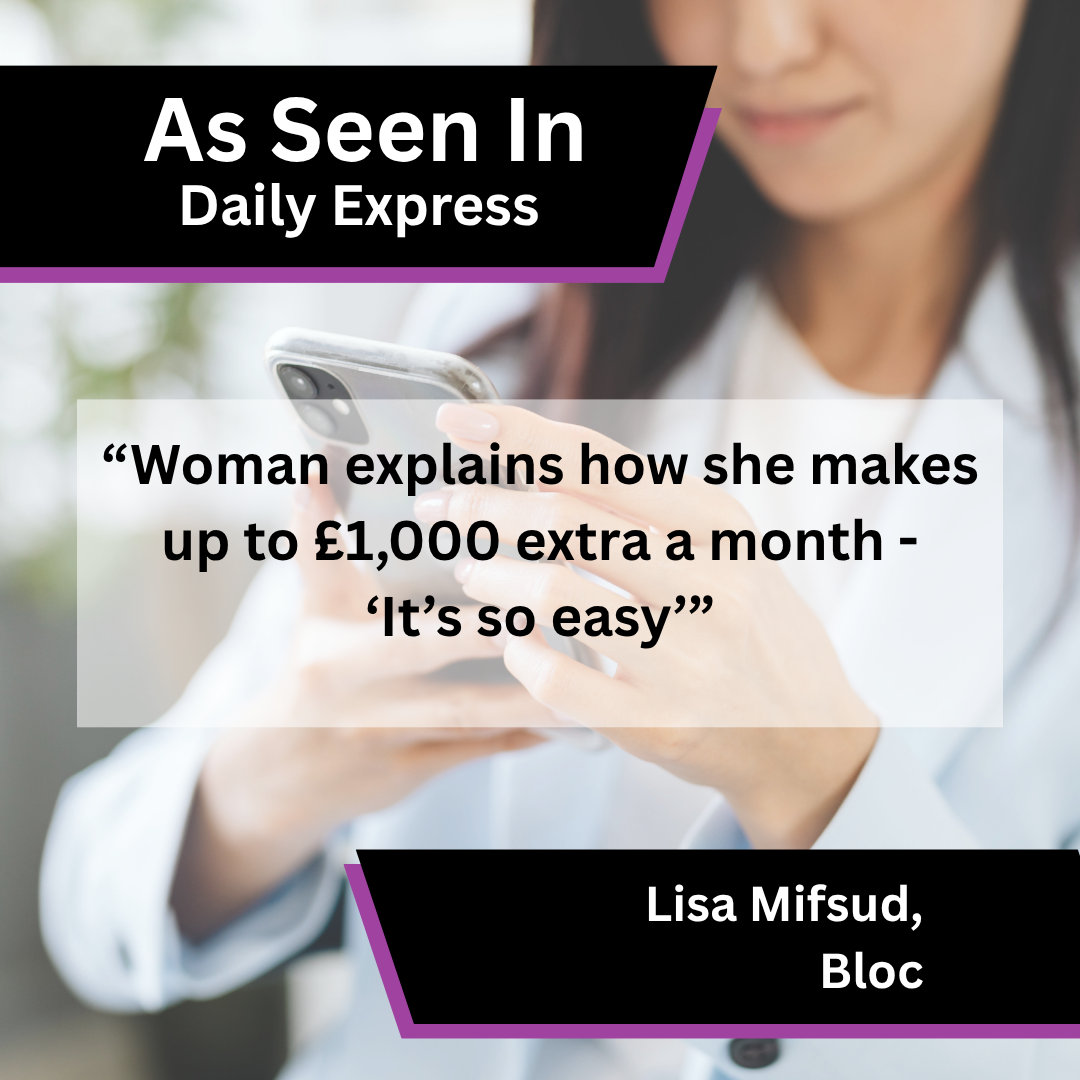
Later archive examples took Bloc into spending and consumer money stories. The Daily Star published a feature about a student dealing with tight finances who received free experiences or treatments. The Daily Express carried a piece about a woman earning additional income through activity connected to the Bloc app.
These are both lifestyle and money-related subjects, but they approach the app differently. One is told through a person's personal circumstances, while the other discusses an earning opportunity in the context of higher household costs. Any figures in the original headlines relate to those reported individuals and dates. They are not proof of typical earnings or an income guarantee for Bloc users.
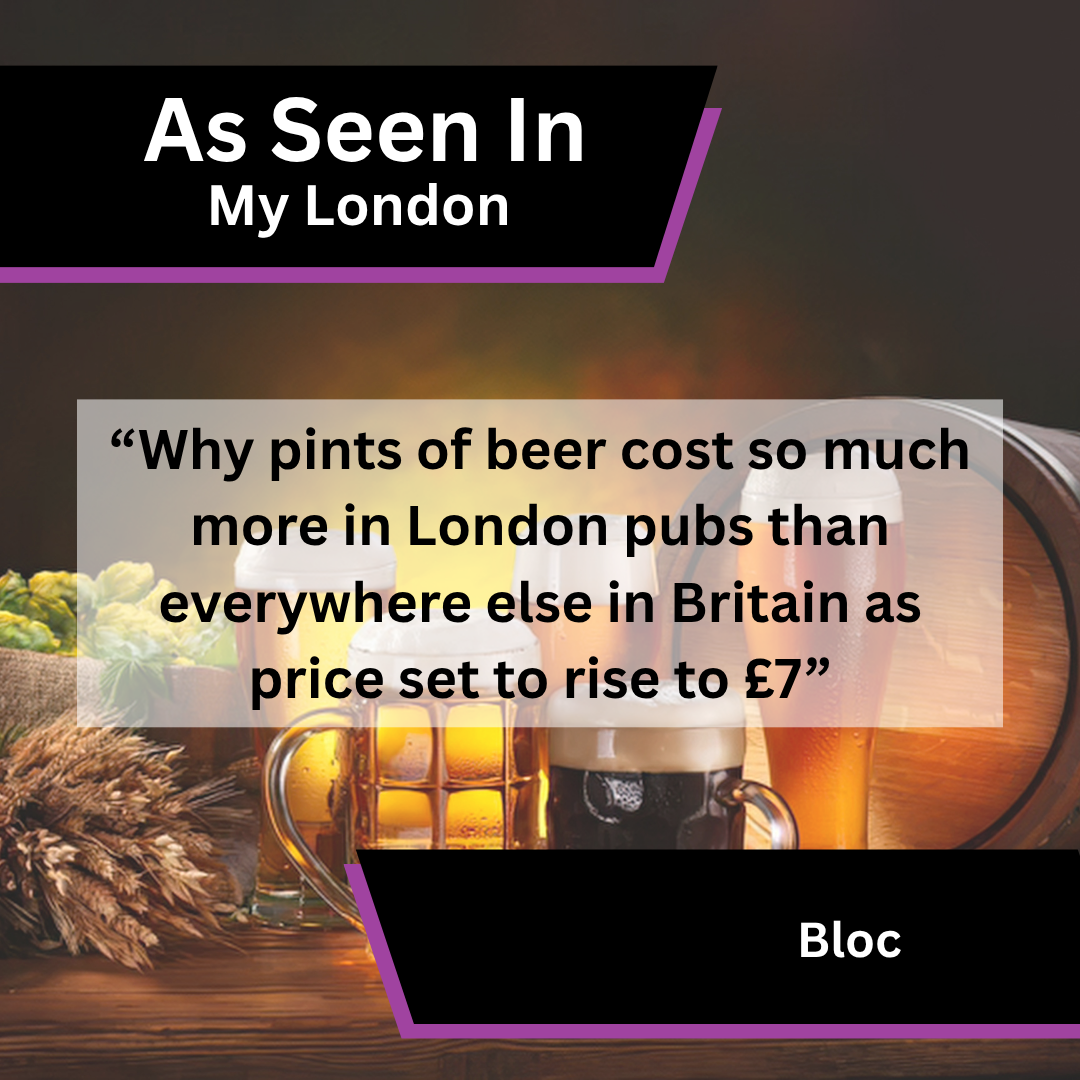
MyLondon also published an article on the rising cost of pints in London compared with other parts of the country. That illustrates how a service connected with venues and socialising may be relevant to conversations about hospitality and consumer spending.
These different angles give a more useful picture of consumer PR than simply claiming that Bloc appeared in a national newspaper.
Founder expertise for business and technology journalists
The archive also records the founder Josh Wood as a source for business and technology topics. Forbes published an article about when a growing company should consider investing in human resources. That is a founder-management question, rather than a consumer story about using an app.
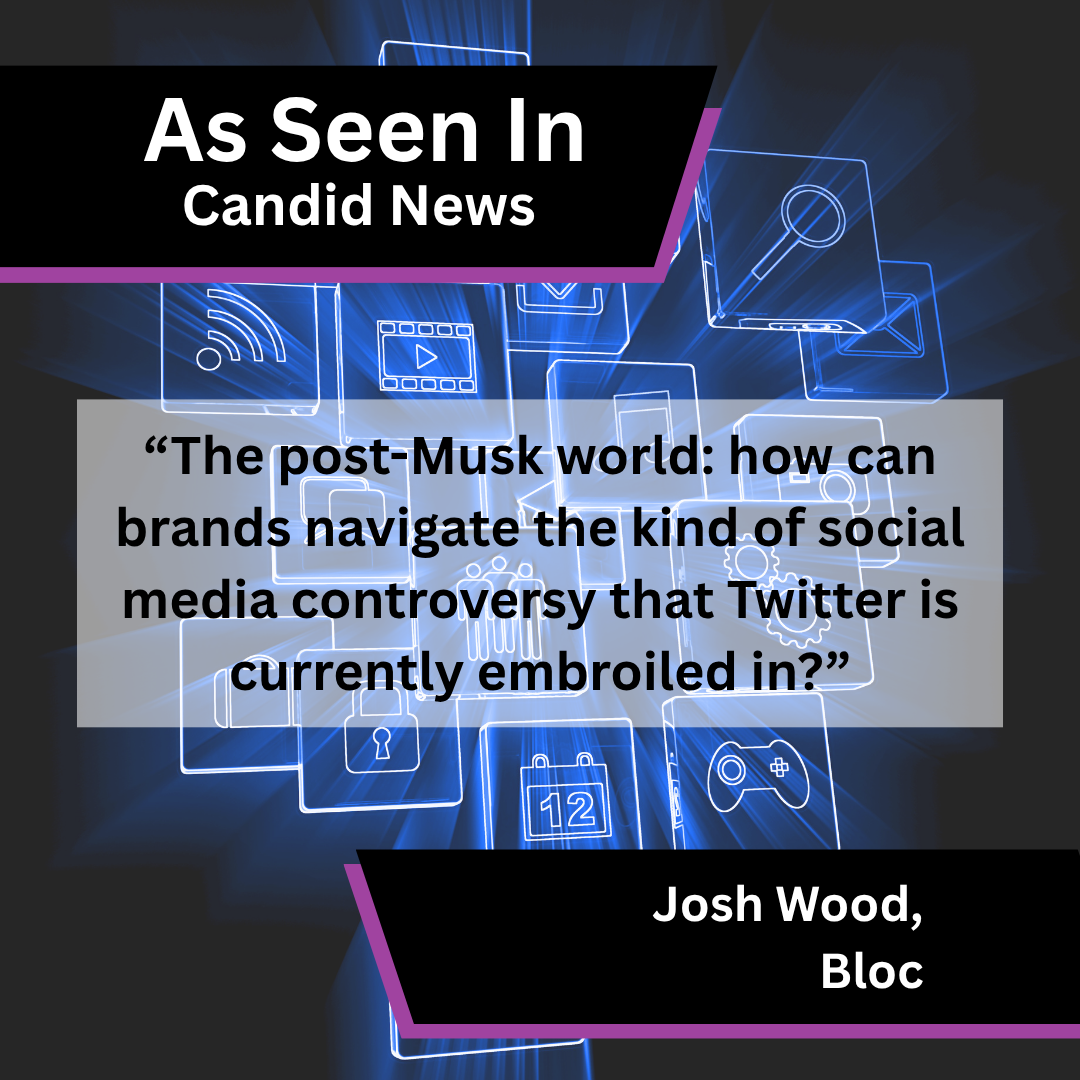
ICAEW Insights recorded a piece discussing crowdfunding as a finance route for small and medium-sized businesses. Candid News covered how brands might respond to changing social media conditions following Twitter's acquisition. Immersive Wire recorded Josh's contribution to predictions for metaverse-related technology in 2023.
Not every historical link is still directly accessible. The original Candid News and ICAEW headline fields contain archived '404' indicators, so we treat the titles as historical source records pending original-link confirmation rather than promising working destinations. The source archive also contains one BizBash entry linking only to its homepage, which is not the same thing as an independently verified article URL.
This is a practical illustration of an expert-founder approach. The spokesperson's business experience can sometimes be used in wider management or technology discussions, even when the product itself is not the main subject. The coverage does not demonstrate that the founder's opinion became industry consensus or a universal best practice.
A note on the archive's related technology articles
Two October 2022 records, from Verdict and Retail Banker International, concern similar technology-sector commentary about the political and financial context of the time. They appear to be closely connected versions of one subject. We have retained both published source entries in the full historical table, but we do not count them as independently developed ideas or use them to portray Bloc as a political campaign.
The source material reflects historic editorial topics. Bloc's core business context here is the social-events app and consumer service, not a claim that it was operating a regulated financial advisory service. Neither the older article topics nor the app's early rewards framing should be used to invent present-day product features.
What the published history demonstrates
The archive contains 14 article or publication entries across an extended period, with consumer and founder-focused coverage. The recorded dates span January 2022 to June 2023, while the engagement term is twelve months. This case study preserves both facts without assuming that every archived URL falls within the exact contract dates.
The articles also differ in how they reached readers. Several use the same real-life dating narrative, some tell separate consumer-money stories, and others use the founder as an expert contributor. They are valuable examples precisely because they show different editorial routes for a consumer technology business.
Publicity is not a proven increase in app installs, active users, event attendance, retail sales, venture funding, Google rankings or backlinks. Those measurements would need separate source data. What the available records support is a history of media coverage that took Bloc beyond a simple product announcement.
Published coverage results
Images from the coverage

Campaign details
| Result | Details |
|---|---|
| Client | Bloc |
| Founder / spokesperson | Josh Wood (named in source coverage) |
| Campaign length | 12 months |
| Historical published records | 14 separate source entries over an extended date range, including related or republished stories |
| Archive date span | 17 January 2022 to 30 June 2023 |
| Editorial themes | Real-world social discovery, personal stories, consumer spending, startup leadership and technology commentary |
| Selected titles | Daily Mirror, Daily Mail, Daily Express, Forbes, ICAEW Insights and MyLondon |
Frequently asked questions
What kind of consumer story helped Bloc reach national media?
A real-life dating story about hundreds of matches without a date was reported by several national and regional outlets. The human experience came first, with Bloc relevant to the idea of meeting people at real-world events and venues.
Did all fourteen archive entries represent separate PR angles?
No. Several were related coverage of the same consumer dating narrative, and some technology articles were connected or republished. The case study lists original source URLs transparently while distinguishing that from the number of distinct campaign ideas.
Does a twelve-month PR engagement mean every historical article was published within that exact period?
Not from the evidence presently available. The confirmed contract lasted twelve months, but the archive spans January 2022 to June 2023. We would need actual contract start and end dates to establish precisely which publications were achieved within the engagement.
Could your app or founder become a credible media source?
Fair Public Relations helps consumer businesses and founders find editorial angles based on their products, experience and relevance to readers. See our Technology PR service and PR for Founders, or contact our team at Contact Fair PR.
