

Allister Frost
Expert commentary and thought leadership PR | Three-month campaign
The story
Artificial intelligence produces a constant supply of headlines about jobs, skills and disruption. The problem for journalists is not a shortage of people willing to comment. It is finding a source who can explain what actually matters to workers and organisations without resorting to fear or empty promises.
Allister Frost is a keynote speaker, author and former Microsoft leader whose work focuses on a future-ready mindset. His professional perspective sits at the meeting point between technology and people: what happens when workers are told a major change is coming, what employers can do to prepare them and how individuals can make reasoned decisions without getting swept up in alarming predictions. That is a more specific editorial proposition than presenting someone simply as an AI commentator.
The media coverage associated with Allister shows that a coherent set of ideas can be useful across technology and HR publications even when there is no single product launch at the centre of the story.
The client and objective
Allister's public work addresses changing workplaces and the practical importance of readiness, curiosity and adaptability. The three-month campaign objective was to build relevant editorial visibility for that perspective, establishing him as someone journalists could consider when discussing AI anxiety, workplace readiness, morale and career change.
That required more than presenting a biography. An expert may have impressive credentials, but the useful part of an editorial contribution is a specific argument or piece of insight that helps the reader understand an issue.
The strategy
The recorded coverage is organised around several related questions: Is AI fear out of proportion to the evidence? Are employers genuinely preparing people for technological change? How should an employee approach a major career decision? What happens to confidence when a workplace feels uncertain?
These are connected concerns, but they do not make the same story. Some are technology and innovation subjects; others are primarily about people management and work psychology. A focused expert profile can speak to more than one editorial beat when the experience and the argument genuinely fit.
Rather than manufacture a dramatic forecast about the disappearance of jobs, the PR story was the lived human challenge of change and the decisions people make in response.
AI anxiety and the limits of alarmist headlines
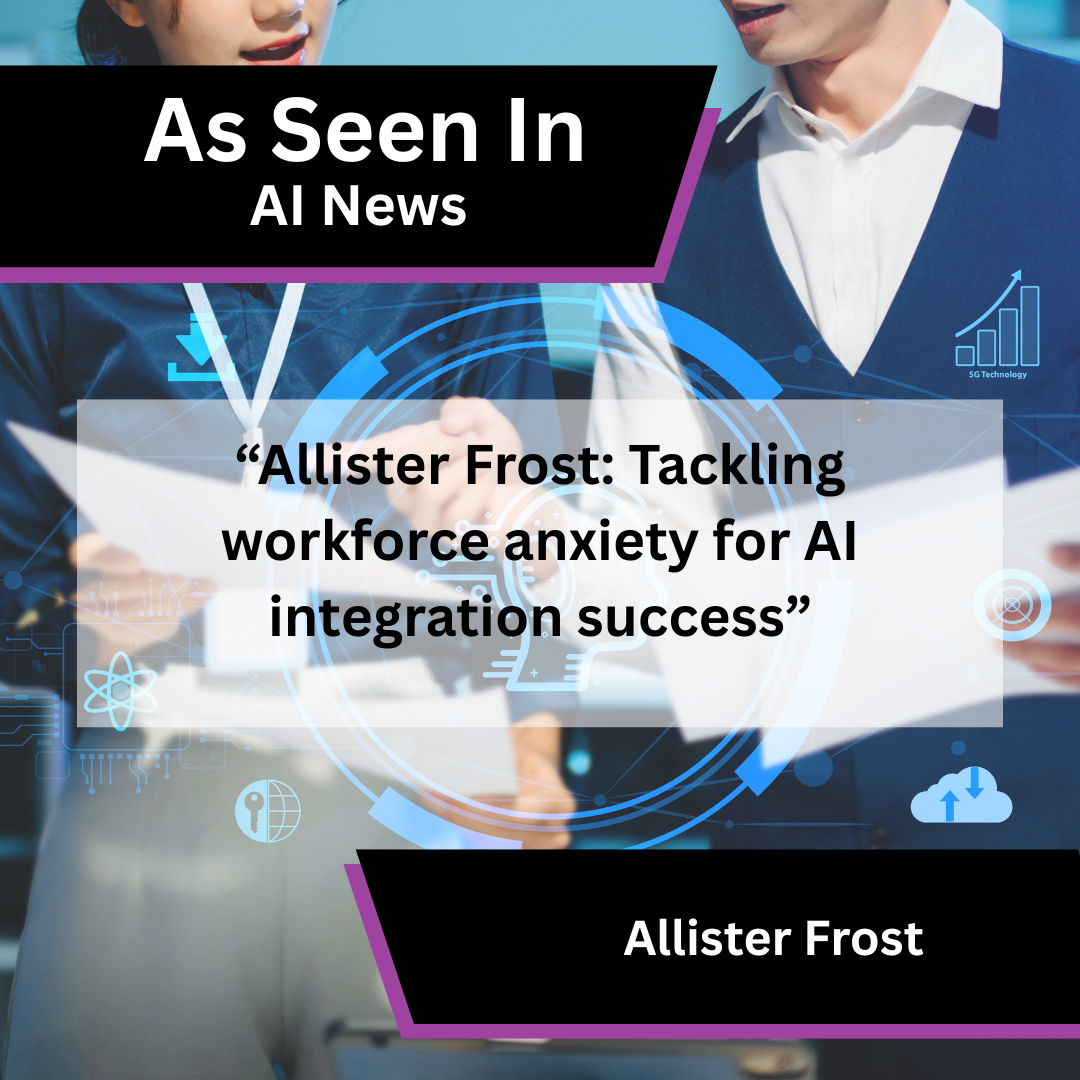
AI News explored perspectives that are easily lost amid dramatic claims about artificial intelligence. A thoughtful source can help a journalist distinguish technological possibility from actual implementation at work. That might involve the distance between a tool’s advertised capabilities and the training people receive, or why uncertainty can affect workplace confidence even before a business changes its processes. Allister’s message provides a human lens for that debate without depending on an unverifiable prediction about exactly which jobs will disappear.
Read the AI News coverage listed in the complete linked results table below.
The important editorial contribution is not simply saying AI is good or bad. It is to help readers distinguish plausible changes from sweeping claims and make space for practical responses.
Is an employer genuinely ready for AI?
TechRound’s article on identifying an organisation that says it is AI-ready without doing the substantive preparation asked an especially practical question. Beyond software purchases, is a company giving people the time, explanation, training and confidence to change how work is done? The editorial value is in identifying this gap between public claims and working reality. It provides a constructive basis for commentary to founders, managers and employees rather than treating technology adoption as a branding exercise.
Read the specific TechRound feature
For business readers, the issue is concrete. Does a firm train and support its people? Are expectations realistic? Are leaders using fashionable terminology without explaining what employees are supposed to do differently?
The value of a credible source lies in asking those questions clearly, not suggesting that buying one tool will solve the whole problem.
Career change without panic
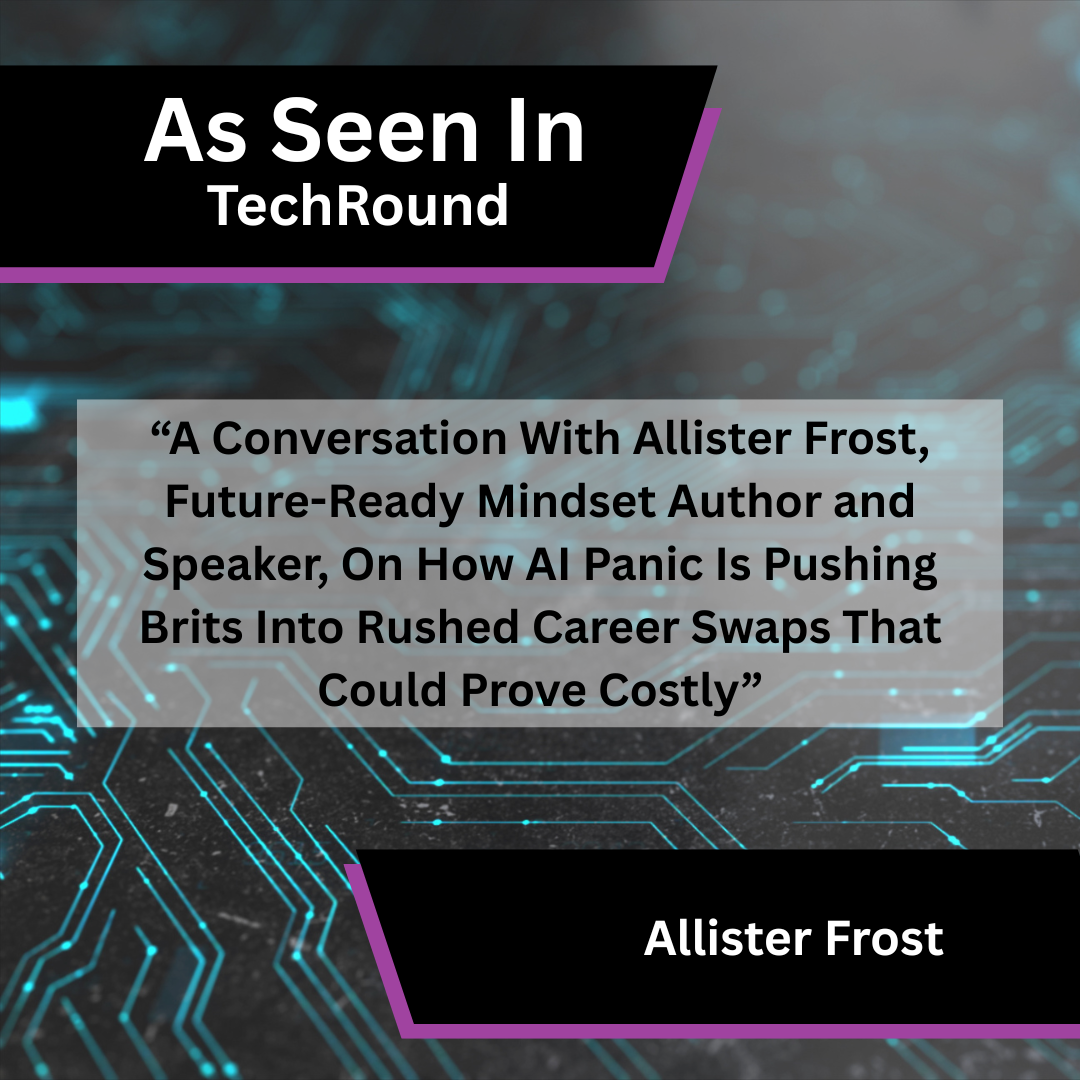
In a separate TechRound interview, Allister discussed the risk that anxiety about AI can push people towards rushed career decisions. The story is meaningful because the uncertainty is personal. Someone worried about their professional future may be tempted to make a dramatic move before assessing transferable skills, practical opportunities or the changes actually happening in their sector. A responsible media contribution encourages considered planning rather than offering generic reassurance or instructing people to resign.
A responsible contribution must acknowledge that different sectors and people face different circumstances. The point is to help readers think carefully, not give individual employment or financial advice without knowing their situation.
Morale, management and confidence
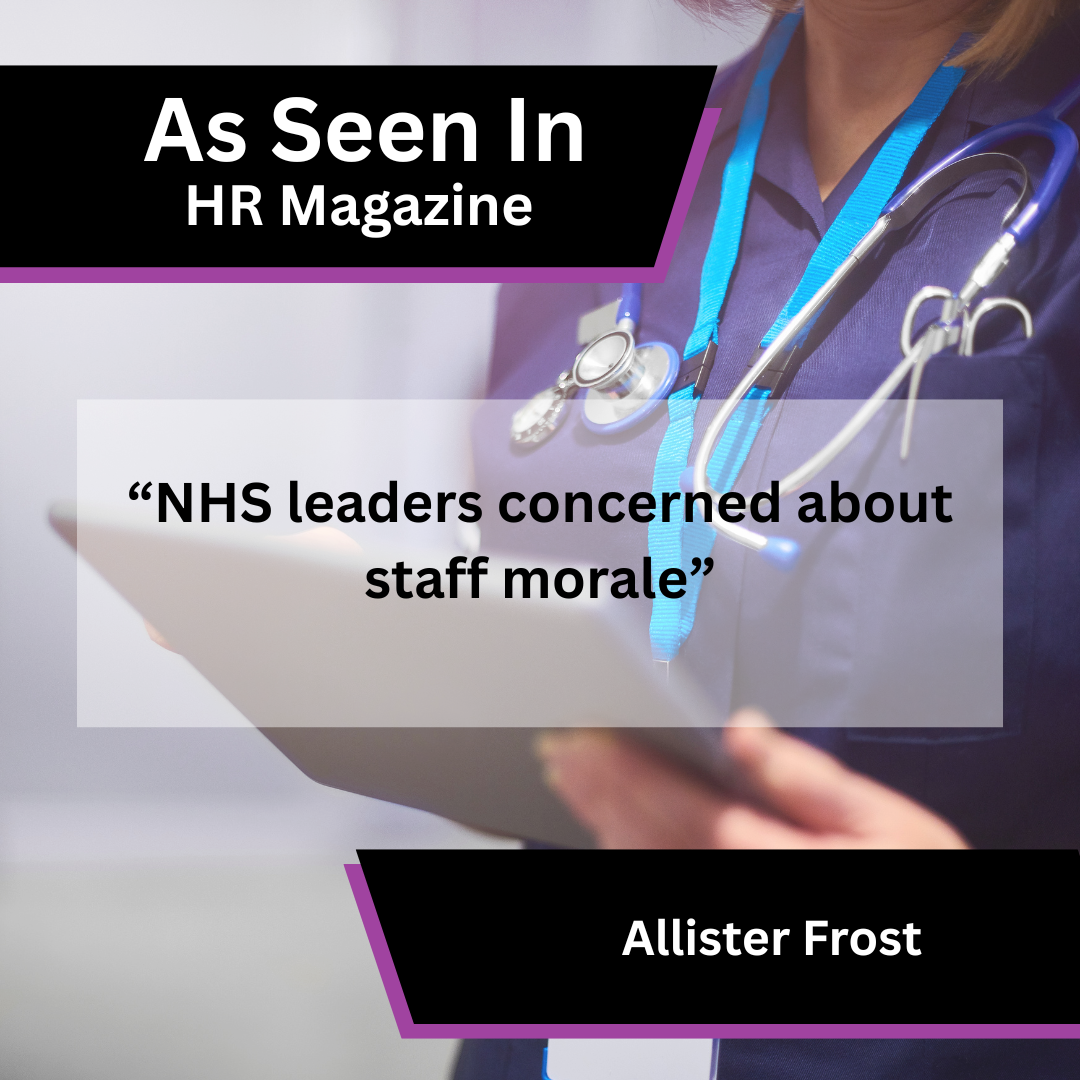
HR Magazine’s coverage of workplace morale, alongside an introduction to Allister as a speaker and specialist, moved the discussion into the concerns of HR and people leaders. Confidence, communication and the behaviour of managers matter when staff face changing expectations. In that setting, the most useful commentary is not a claim that every worker should embrace every new technology. It is a more grounded explanation of why uncertainty needs to be addressed and how a human-centred approach can make change more understandable.
An HR audience may be particularly interested in communication, leadership behaviour, staff confidence and how organisations respond to uncertainty. Those are different questions from the technical development of AI systems, but they sit naturally within a future-ready workplace perspective.
Read the HR Magazine entries in the complete coverage table.
Why the publication mix matters
The original archive includes AI News, TechRound and HR Magazine. This is a compact but coherent publication set, rather than a random collection of outlets with no relation to the source.
It shows how a specialist viewpoint can support several distinct editorial openings: technology adoption, employment decisions and organisational culture.
Making fast-moving AI stories useful to different audiences
The five source-linked articles associated with Allister Frost illustrate a distinction between being visible in a major subject area and helping a particular reader understand it. AI appears in headlines about careers, leadership and company strategy, but the readers of those articles do not all have the same question. A worker considering a dramatic career change may be asking whether their existing abilities still matter. An employer assessing readiness needs to understand the people, procedures and training that would support a new technology.
The TechRound coverage about organisations appearing to be AI-ready without necessarily having the substance behind the claim is a useful example of the second question. The subject moves beyond announcing a new tool and towards whether a workplace has the knowledge and processes to implement it well. A separate article on anxiety-driven career changes addresses employees making decisions under uncertainty. The same general field offers more than one useful media angle because the problems are different.
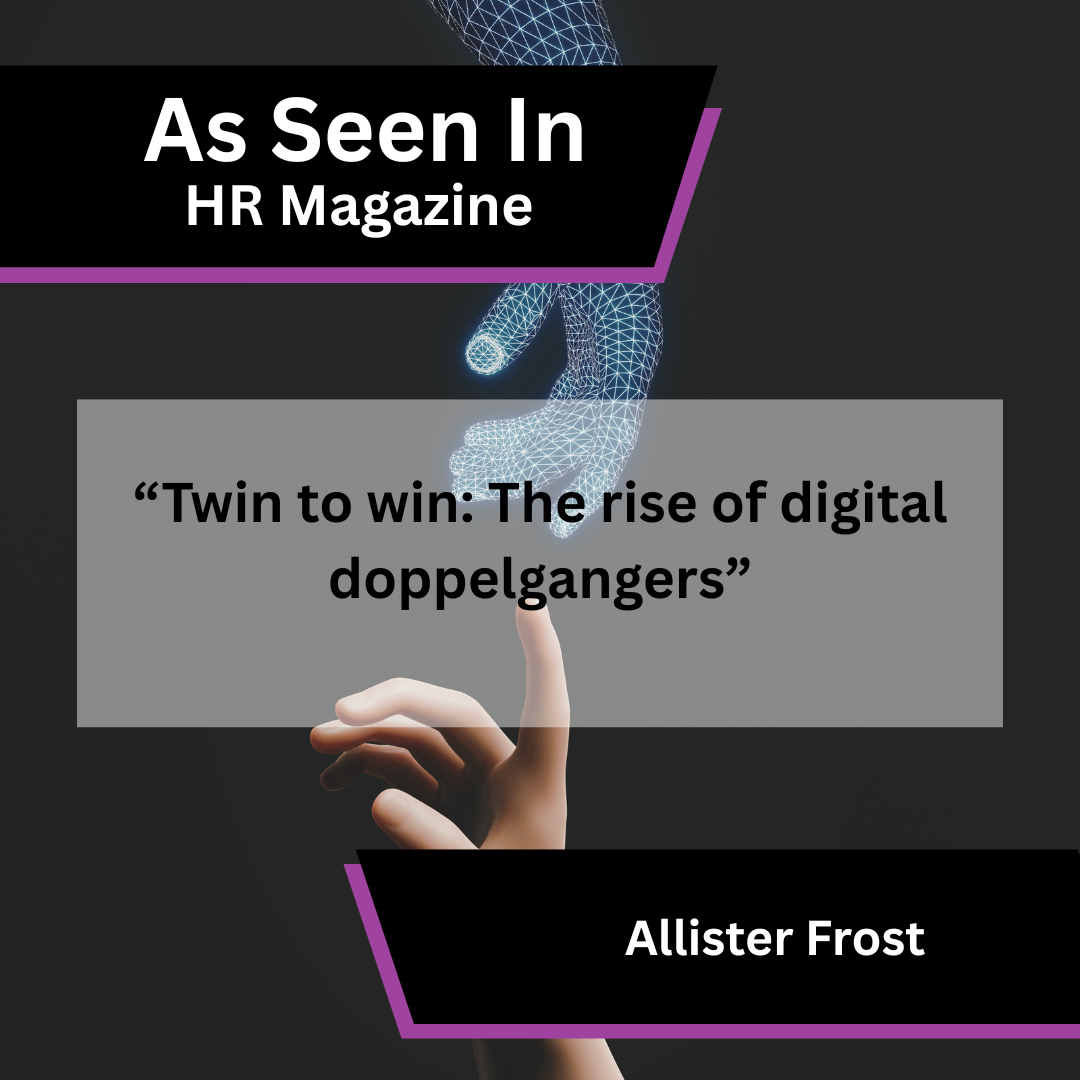
The source archive also includes HR Magazine coverage, including a feature introducing Allister and a discussion of staff morale. HR readers have a particular interest in the human effects of change: confidence, management behaviour, expectations and trust. That emphasis is not identical to a technology publication assessing product functionality. Matching the expert's contribution to the readership can make thought leadership more relevant without implying the expert can answer every technology or employment question.
A credible thought-leadership campaign does not require anybody to claim they can predict the future of AI. It requires genuine knowledge, a defensible point of view and relevance to what a journalist is investigating. The supplied three-month campaign is distinct from the broader dates in the historical press record, so the linked examples should not be interpreted as a precise contract-period total. The articles are evidence of editorial appearances, not a verified increase in keynote enquiries, consultancy fees or followers.
The results
The wider documented press record contains five distinct linked articles involving Allister Frost’s commentary and expertise, including AI News, TechRound and HR Magazine. Those examples are set out in the linked results table, showing readers the subjects and publications behind the campaign rather than relying on a broad claim of visibility.
The three-month campaign duration is distinct from the wider historical press archive. The examples demonstrate the breadth of the documented coverage, not a claim that every archived article was necessarily published inside the same precise three-month period.
The evidence establishes editorial publication and topic relevance. It does not, on its own, quantify additional keynote bookings, book purchases, enquiries or website traffic.
| Publication | Date | Article subject | Read |
|---|---|---|---|
| AI News | 2026-01-13 | Stop the AI panic: 5 truths you won't hear from the scaremongering | Read article |
| TechRound | 2026-02-06 | 5 Red Flags Your Workplace Is Only Pretending To Be “AI Ready” | Read article |
| TechRound | 2026-04-08 | AI fear is pushing professionals into rushed career swaps – and that could be a costly mistake | Read article |
| HR Magazine | 2026-04-12 | Introducing Allister Frost | Read article |
| HR Magazine | 2026-05-19 | Widespread concern about staff morale | Read article |
Images from the coverage
What the work demonstrates
This is a case study about making expertise useful, not packaging a job title as publicity. Allister's background and message gave the campaign a recognisable point of view, while different articles explored the practical implications of workplace change.
A clear niche does not have to confine an expert to one publication category. It can open different, connected conversations with editors if each contribution is genuinely relevant and supported by experience.
Results at a glance
| Result | Details |
|---|---|
| Client | Allister Frost |
| Campaign period | 3-month campaign |
| PR focus | AI, workplace change and thought leadership |
| Documented coverage | 5 individually linked editorial examples with titles and publication dates in the article table above. |
Frequently asked questions
Can a keynote speaker gain coverage without announcing an event?
Yes. A speaker with genuine expertise may be a relevant source on an issue already being reported, independently of speaking engagements.
What makes AI thought leadership credible?
Clear professional experience, useful distinctions, evidence and the willingness to acknowledge uncertainty. A dramatic prediction is not automatically a stronger news contribution.
Is an AI commentator automatically qualified to give employment or mental-health advice?
No. Expertise has boundaries. Source credentials and the subject matter need to match the journalist's question.
Do these articles prove an increase in speaker bookings?
No. Publication evidence and commercial outcomes are separate. The original source data does not establish attributed bookings.
Could your expertise make news?
Fair Public Relations is a journalist-led agency working with founders, experts and small businesses. We help credible spokespeople identify genuine media opportunities and contribute material that is useful to journalists.
