
Earned-media support for charities, community organisations and evidence-led awareness campaigns
Charities and nonprofit organisations often work on issues that matter deeply to the people they support. The publicity challenge is to explain those issues accurately and respectfully, rather than reduce people to a fundraising slogan.
Fair Public Relations is a journalist-led boutique agency founded by former UK national journalist Jordan Baker. We help suitable charitable organisations, community initiatives, nonprofit service providers and specialist advocates identify genuine editorial opportunities through responsible real-life stories, expert commentary and verifiable organisational developments.
We do not buy favourable journalism or guarantee coverage for a good cause simply because the cause matters. We also do not run political campaigning or work for excluded political organisations. The aim is independent media coverage that gives readers useful information and treats people who share their experiences with dignity.
Charity & Nonprofit PR
Charity publicity in the UK and United States
Charities in Britain and nonprofit organisations in the United States operate under different terminology, charity and tax frameworks, media habits and local service systems.
A UK community organisation might speak about a particular health awareness initiative or local services, while a US nonprofit could be responding to a distinct state or national situation.
We check each organisation's mission, service area, formal status and permissible claims instead of assuming a UK charity registration is equivalent to US tax-exempt recognition.
We do not offer legal or tax advice about charity status. We support suitable UK and US campaigns and assess Canadian nonprofits where practical.
Reporting should follow the community and the audience rather than adopt interchangeable national facts.
Read more about our UK PR agency and US PR agency approaches.
Who this specialist page is for
The service can suit health and disability awareness charities, community support organisations, educational nonprofits, legitimate family and social service groups, specialist membership organisations and founders or leaders whose work has verifiable public value.
Eligibility depends on the actual organisation and proposed subjects. We distinguish independent service and awareness work from party-political lobbying, election campaigning, ideological propaganda or political clients, which are excluded from Fair PR's work.
A charity seeking only a paid fundraising advert or guaranteed donor acquisition would not be buying that service through earned PR. We also consider whether a campaign asks vulnerable people to reveal personal details unnecessarily.
This page belongs within our existing Who We Help audience structure, not a replacement for the original public-sector, health or professional service sectors.
What makes a charity story newsworthy?
Journalists usually need a specific story, credible information and a reason their readers should pay attention now. That could be an independently important service development, a carefully documented local need, practical guidance from a qualified professional or a first-person account offered freely by someone affected.
A fundraising target by itself may not provide enough editorial value. We look for the actual public importance of the issue and what the reader can learn rather than simply repeating an organisation's mission statement.
We also avoid overstating how common a condition is or how effective a programme has been. If numbers or claims are important, we need reliable sources and clear definitions. Genuine awareness starts with trustworthy facts.
Tourette's Action: a relevant historic awareness campaign
Our Tourette's Action UK case study documents a three-month campaign supporting June awareness activity. The original approved record contains three national articles from June 2023 in Metro, Mirror Online and iNews. The work focused on people sharing first-hand experiences and challenging misunderstandings about Tourette syndrome.
This is a directly relevant charity and lived-experience example, not a promise of three national features for another nonprofit.
We preserve the approved three-month period and the historical publication date rather than implying that this is a new 2026 campaign. Sensitive story consent and accurate attribution remain essential.
Real-life stories require informed consent
Some people may welcome the opportunity to discuss an experience in public, while others may not. A charity should never make participation in support or services dependent on telling a personal story.
We explain where an account might appear, what information could identify someone and how a journalist may ask follow-up questions.
We avoid promises about editorial control, absolute anonymity or the ability to remove a published article after the fact.
Where children, vulnerable adults or health information are involved, additional safeguarding and permissions may be necessary. Individuals should have time to make an informed choice and understand the risks of a permanent public record.
We do not manufacture quotes, infer consent from a previous website testimonial or turn one person's experience into a claim about every beneficiary.
Qualified expert commentary alongside lived experience
An organisation may have practitioners, researchers or leaders who can explain its subject to a reporter. Their credentials matter. Someone with personal lived experience can speak authentically about that experience, but should not automatically be presented as a clinician or the definitive voice of a whole community.
A medical or psychological question may require the appropriately qualified professional, while policy, legal and financial matters can demand different specialist authority. We help separate these roles in the press materials so an editor knows whom to approach.
Where scientific research is discussed, the evidence should be described accurately, including relevant limitations.
A trustworthy charity is often better served by a carefully bounded explanation than a dramatic but unsupported health or social claim.
Awareness months and national news cycles
Some causes have an awareness day or month that creates a relevant time to speak to the media, but a calendar date alone cannot guarantee coverage.
We assess whether the campaign offers a fresh perspective, verifiable information, an appropriate interviewee or a concrete event worth reporting.
An important story may also emerge outside an awareness window, when new research, a service development or a public conversation creates a useful opportunity.
We prepare materials early enough for editors to consider them and avoid suggesting that a publication owes coverage because of a campaign calendar.
A charity's message should be accessible to people unfamiliar with the issue, with accurate definitions and signposting.
Newsworthiness is determined by the story's relevance, not by the seriousness of the cause alone.
Research and data stories for nonprofit organisations
Charities sometimes gather valuable observations about the people using their services, enquiries they receive or problems their members report.
These records can help inform reporting, but one organisation's caseload is not automatically a national representative sample. A percentage of enquiries cannot be treated as a percentage of people experiencing a condition.
We ask for dates, location, counts, definitions, source methodology and appropriate permissions. Privacy and data-protection constraints can be particularly important when information concerns children, disability, housing or other sensitive circumstances.
Aggregated figures may still be identifying in a small community. We prefer meaningful, carefully explained findings and reliable public research over exaggerated trend claims or material that could reveal someone who sought private help.
Service launches, genuine community developments and local media
A new accessible service, confirmed partnership, substantial grant-funded project or other verifiable organisational development may interest regional or sector publications when the change has genuine public consequences.
We establish what is new, who can use the service and whether funding, availability and eligibility details are correct. A routine internal meeting or a future ambition without evidence may not justify national reporting.
Local and community news can still matter because it reaches the people who can make use of a service, though we do not guarantee enrolments or donations from the resulting article.
When staff, volunteers or partner organisations are named, we verify their roles and permissions. Sensitive clients should never be used as illustrative publicity without clear consent.
How we prepare a nonprofit media spokesperson
A useful press profile describes the organisation's work, the spokesperson's real responsibilities, appropriate qualifications, geographic reach and subjects they can discuss. It may include reliable reference material, a rights-cleared portrait, direct contact details and a clear indication of availability.
For lived-experience contributors, the preparation should include a discussion of boundaries and the possibility of unexpected questions. We do not coach someone to alter or embellish their account.
We may help a client clarify complicated terms, provide accessible context and arrange a sensitive interview, but the reporter will make their own editorial decisions. Appropriate preparation helps protect the credibility of the contributor as well as the organisation.
Media outlets and nonprofit relationships
Some publications cover charity and community subjects as part of their public-interest reporting. Others primarily examine broader social, health or business questions.
We research the journalist's actual remit and avoid indiscriminate mass pitching. A charity might be one contributor among several perspectives in an article, and editors may also seek independent experts or critical comment. We respect that independence.
We do not present advertising, sponsored content or paid editorial packages as earned media. We also avoid using newspaper logos as endorsements of an organisation or implying that publication validates the quality of all its services. Coverage is evidence that a story appeared, not proof that every claim in a campaign is correct.
A campaign can be about awareness rather than immediate fundraising
Charities may measure public awareness, service enquiries, understanding, volunteer interest, event participation or donations, depending on their real objectives. Independent press coverage can play a part in a broader strategy, but no article guarantees those outcomes. A sensitive health or disability story should not be judged solely by the number of donations it produces.
We can record actual published articles, differentiate original stories from syndication and discuss relevant referral information when available. Search rankings, editorial backlinks and AI assistant recommendations cannot be promised.
An organisation must also maintain clear services, accurate public contact information and a responsible way to respond if media interest leads people to seek support.
Fair PR's services, costs and eligibility
Standard PR for an eligible charity or nonprofit with appropriate earned-media opportunities currently costs £797 a month in the UK, US$997 in the United States or CAD$1,497 in Canada.
An eligible individual practitioner or specialist with suitable expertise might consider narrower Expert Commentary PR at £397, US$497 or CAD$747 monthly, but it is not a comprehensive charity awareness or organisational campaign.
Both services have an initial three-month commitment followed by one full billing cycle's notice.
We assess the organisation's purpose, safeguarding considerations, spokesperson availability and evidence before making a recommendation.
The wider Who We Help page explains our audience approach.
See Standard PR and Expert Commentary PR for the current descriptions.
Further reading
-
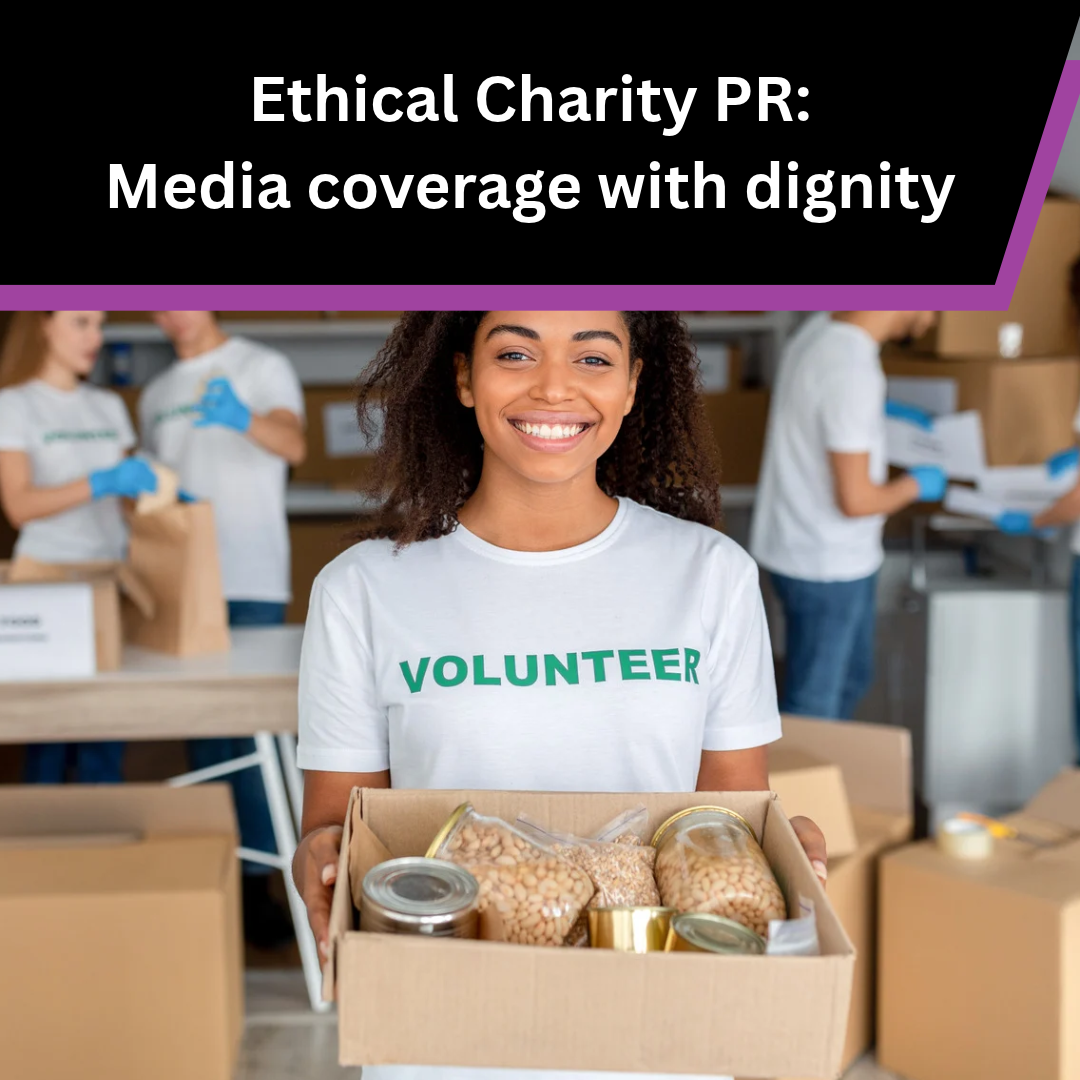
How Can Charities Earn Media Coverage Without Exploiting Beneficiary Stories?
-

What Should an Expert's Website Include So Journalists Can Verify and Contact Them?
Still Have Questions? We’ve Got You
-
It may, if a real story, qualified source or credible development is relevant to an editor. We cannot promise national articles simply because a cause is important.
-
Yes, where the organisation and story fit our criteria. We adapt to local audiences and distinguish legal statuses and conditions in each country.
-
Potentially, with informed consent, appropriate safeguarding and control over what contributors choose to disclose. We do not manufacture experiences or promise editorial control.
-
No. Fair PR does not work on political campaigning and does not sell guaranteed publicity or donor acquisition through earned media.
-
No. We report genuine earned coverage, without promising fundraising results, referrals, rankings, editorial links or AI recommendations.
-
Standard PR costs £797, US$997 or CAD$1,497 per month by country. Expert Commentary PR is narrower and may be appropriate only for eligible individual experts.
Want more detail?
You can read our full FAQs for more information on how we work, reporting, approvals, AI, media contacts and what to expect from earned coverage.
DiscDiscuss charity or nonprofit PR
Tell us about the organisation, communities served, legitimate spokespeople and verified stories you can share without harming people who rely on your support. We can assess real editorial fit and our standard service options.