

Child sleep specialist Gemma Coe | Three-month historic PR engagement
Parenting and national media with expert advice
Every autumn, millions of families in the UK adjust their schedules around the clocks changing. For parents of babies and young children, that familiar calendar event can raise practical questions about bedtimes, naps, early waking and routines. For a child sleep consultant who works with these questions every day, it is also an obvious opportunity to provide timely, genuinely useful guidance to journalists.
The historical Child Sleep Specialist archive records Gemma Coe contributing to articles on the clock change, newborn sleep environments, age-appropriate sleep needs and nighttime waking. After removing two exact duplicate URL records, there are ten distinct historical publication entries. It’s a three-month engagement. Because the records run from October 2024 through March 2025, this page does not claim all ten were published during those precise three contracted months.
The client: Gemma Coe and Child Sleep Specialist
Gemma Coe is the consultant behind Child Sleep Specialist, a UK-based practice helping families understand and address infant, toddler and older children's sleep difficulties. Her official site and professional profile describe sleep consultancy, parenting support and a personalised approach, rather than one method being appropriate for every child.
Gemma's professional background includes children's nursing, public health and teaching qualifications, which her official consultant biography also records. As a parent herself, she can speak to family routines as well as professional practice. We do not suggest that a press article is proof of any individual family's sleep outcome, or that she offers medical diagnosis in place of a clinician.
For a specialist business of this kind, the commercial challenge is that a family may not know it needs professional sleep support until a specific problem arises. Ordinary awareness advertising can describe a service; editorial commentary can demonstrate how a named expert reasons through a problem and communicates with parents. That distinction makes a seasonal advice article especially relevant to the business's real subject.
The editorial opportunity: serve parents at moments they are looking for answers
The recorded media themes divide into several recognisable parenting concerns. The end of British Summer Time gives journalists a firm calendar event and a deadline. The arrival of a newborn creates questions about the sleep environment. January prompts features about family routines and how much sleep different ages need. Ongoing night waking provides a later, practical follow-up angle.
The source rows document publication, not every step in the outreach process. We can say the campaign material was used for these editorial questions, including source topics explicitly marked as pitches, but cannot invent press-release distribution, individual email exchanges, interviews or the extent of behind-the-scenes consultation. What matters in the evidence is the specificity and relevance of the topics.
A seasonal hook: preparing children for the clocks going back
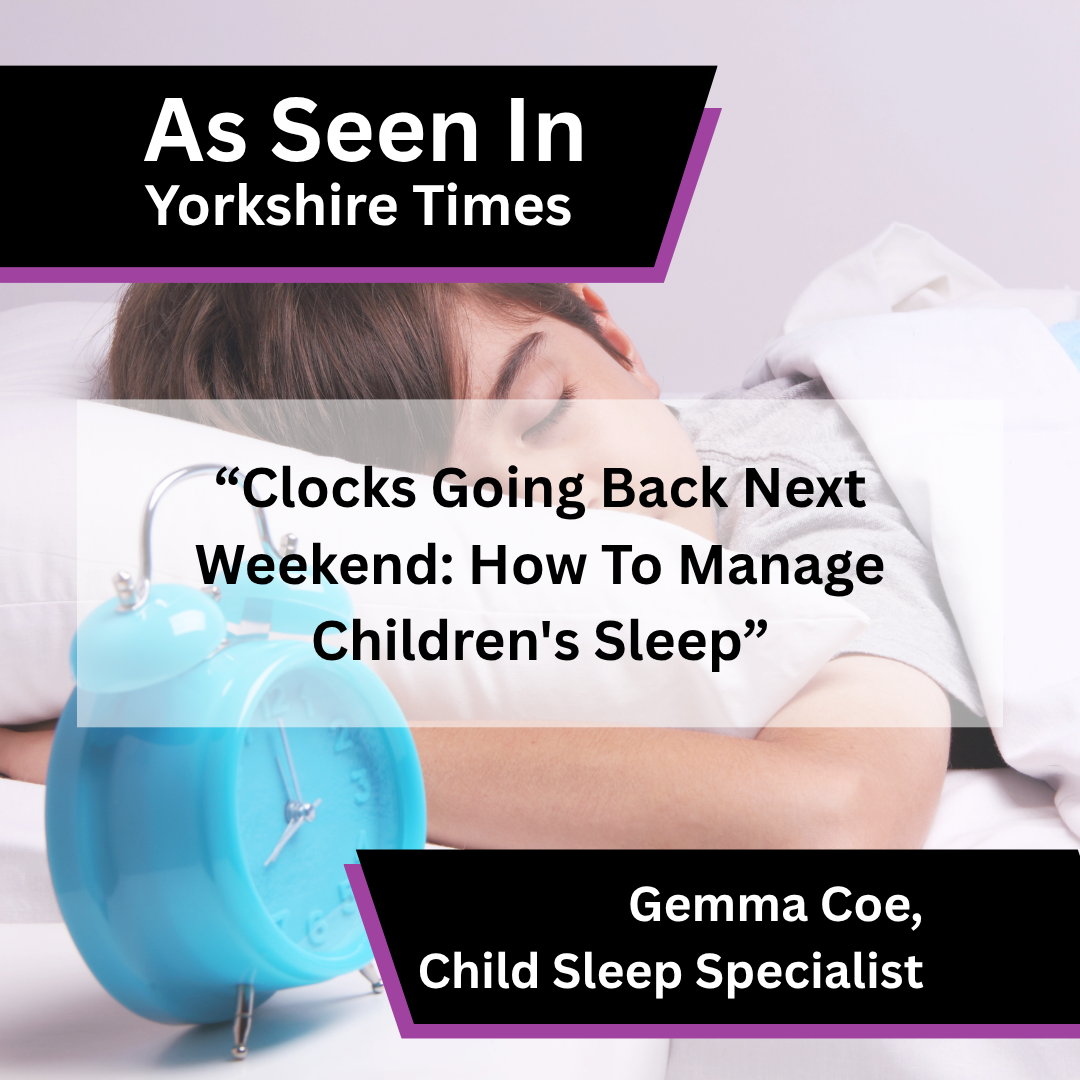
The largest cluster was built around late October 2024, as families prepared for the seasonal clock change. Yorkshire Times carried a feature recorded on 9th October about managing children's sleep before clocks went back. The practical theme was immediately understandable to a local family audience, even before the more prominent national coverage appeared.
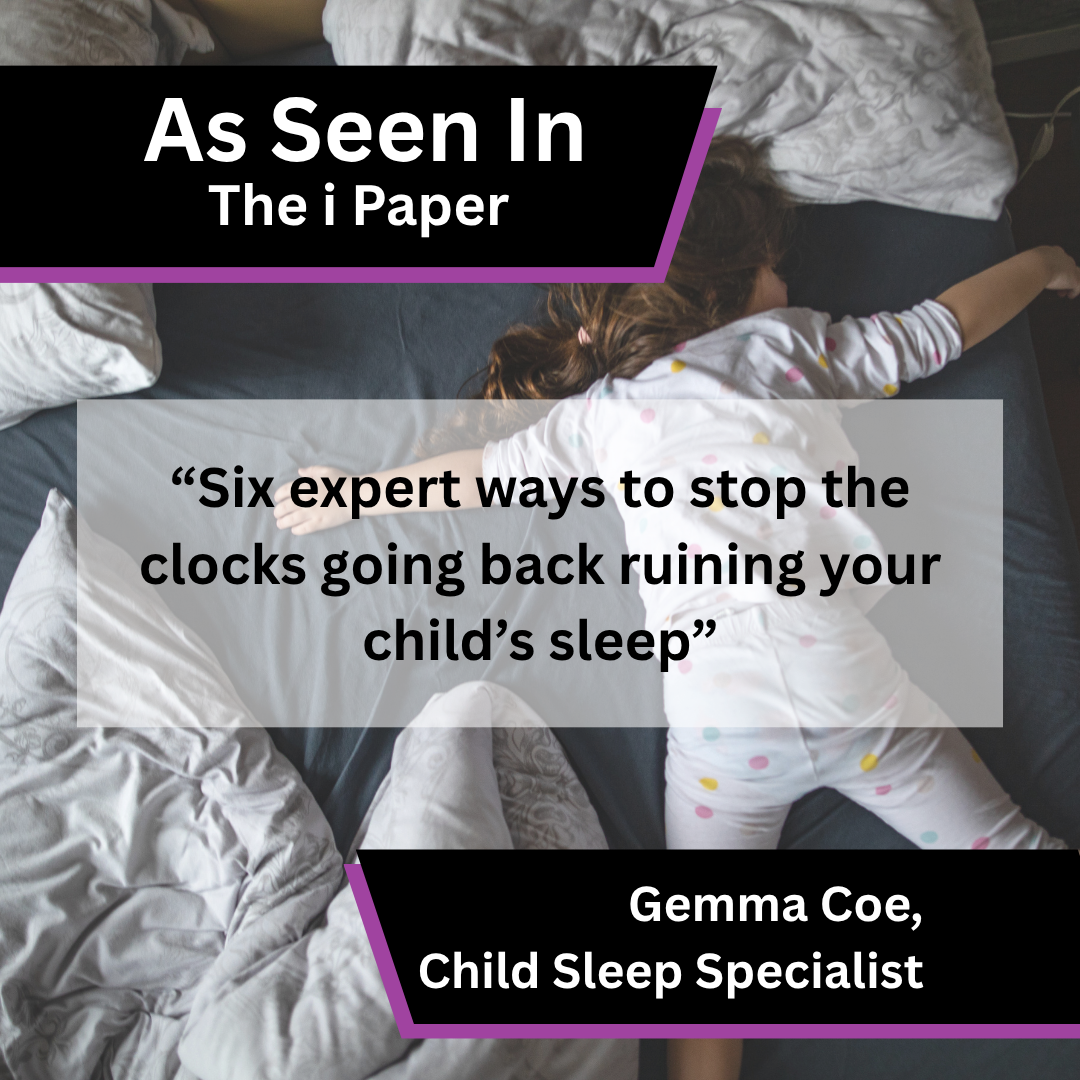
On 24th October 2024, The i Paper published a substantial article in which Gemma was explicitly identified as a child sleep specialist. The live editorial text names her, links to her business and presents her advice in a structured, reader-friendly format. That is stronger evidence than a generic online mention: the author and contribution can be checked directly.
Related coverage appeared in Gloucestershire Live, the Liverpool Echo and the Mirror. All are recorded on 26th October 2024. The themes overlap because the same seasonal question interested different outlets and audiences. They are separate publication URLs, but they are not proof of five entirely new story concepts.
One extra i Paper entry in the raw archive duplicates exactly the first i Paper URL. That second row is an administrative duplicate, not another newspaper article, and will be retained in the underlying source board as a record but omitted from the counted public results and image gallery. The appropriate result is a truthful set of distinct publication sources rather than an inflated source count.
Newborn sleep: helping parents understand the environment
In November 2024, Parents News recorded an article about creating a more suitable sleep environment for a newborn. This is a different editorial need from changing clocks. It speaks to parents seeking an understandable introduction to practical bedtime conditions and expectations.
The original archive has two rows pointing to that same Parents News URL. Only one distinct source belongs in the public count or intended gallery. As with the duplicate i Paper entry, the second internal row is preserved for audit purposes and should not be converted into an extra visible placement.
Newborn content demands particular care. General sleep advice in a PR case study must never override safer-sleep guidance, medical advice or age-specific precautions. The record is evidence of a published article topic, not a clinical trial or proof that any quoted sleep technique is medically appropriate for every baby.
New year questions: how much sleep children need
By 29th January 2025, the records show a feature in HuffPost UK titled 'How Much Sleep Kids Need (By Age)'. A Yahoo News version is also recorded. Both URLs should appear in the results, while the narrative makes clear that the second is related distribution of a shared subject.
This feature type is evergreen rather than dependent on a single day's news. Parents can search for sleep-duration guidance at many stages of childhood. Journalists in turn need sources who can explain the difference between general age recommendations and individual family circumstances. The specialist's role is to inform and contextualise, not to promise that a child will sleep a certain number of hours after one consultation.
Night waking and specialist follow-up in The i Paper
The March 2025 records represent a new question: what can parents do when a child keeps waking during the night? The i Paper recorded the feature 'I'm a sleep expert – here's how to stop your child waking up at night' on 14th March. Compared with the October clock-change feature, this is a different practical concern and an example of continuing editorial demand for child sleep expertise.
The following day, the original archive includes a Weekend newspaper reference, 'How to get your child to sleep through the night', with a Google Drive source document rather than a public web URL. This is retained as its own recorded publication format, but it appears related to the same underlying editorial angle as the online i Paper story. The paper proof and publication details should be checked before final publication, and the case should not say it proves a separately commissioned new interview.
Results: publication breadth without double-counting
The retained results span Yorkshire Times, The i Paper, Gloucestershire Live, Liverpool Echo, Mirror, Parents News, HuffPost UK, Yahoo News and the i Weekend print edition. One media brand can appear more than once for different stories. The recorded period is 9th October 2024 to 15th March 2025.
It’s three months of PR work, but that is not synonymous with the entire time span of the archive. The article dates alone do not identify the contract start or end date. More importantly, related articles and syndication should not be interpreted as independent topic creation. The seasonal clocks story appears in several genuine outlets; the HuffPost and Yahoo features share a topic; the March i Weekend edition relates to The i Paper's online feature.
The available evidence supports a concrete outcome: Gemma's specialist subject was recorded across family, lifestyle and national editorial sources. It does not establish how many families booked consultations, an increase in website visits, particular backlinks, or improvements in any child's sleep. Those outcomes would require separate direct evidence.
What the case demonstrates
A credible specialist can make a niche business useful to mainstream journalists when its expertise answers timely reader questions. The clock change was newsworthy because of a predictable deadline and its practical implications. Other features remained relevant throughout the year because they addressed common concerns: newborn settling, sleep needs by age and night waking.
A journalist-led approach to these opportunities depends on being specific, accessible and accurate. A specialist's credibility can come from explaining limits as well as offering techniques, and good PR records must preserve the difference between one article, syndication, a print edition and a duplicate database entry. The value of this case is the combination of relevance, identifiable expertise and transparent documentation.
Published coverage results
Images from the coverage
Campaign details
| Result | Details |
|---|---|
| Client | Child Sleep Specialist, Gemma Coe |
| Owner-confirmed engagement | Three months, start and end dates not yet independently established |
| Distinct historical publications | 10 unique records from 12 PubPB rows; two exact article-URL duplicates excluded |
| Historical article interval | 9th October 2024 to 15th March 2025 |
| Core editorial topics | Clock-change routines, newborn sleep environments, sleep by age and nighttime waking |
| Important qualifications | Syndication and print reuse are distinguished; no bookings, leads, SEO gains or clinical outcome claims |
Frequently asked questions
Did Child Sleep Specialist receive twelve different media placements?
There are ten distinct publication records, including a recorded i Weekend print reference. Some of the remaining entries concern substantially similar stories syndicated or carried by different outlets.
Were all ten placements published within the confirmed three months?
It’s a three-month PR engagement. The historical coverage dates span October 2024 to March 2025, so the records do not prove that all ten appeared during exactly those three months. This case keeps the engagement length and press-record date range separate.
Why did the clock change generate several media features?
It was a predictable, time-sensitive issue that affected the routines of parents and children nationwide. Different publications could make the same practical question relevant to their audiences, sometimes with related or syndicated coverage.
Does expert sleep commentary prove that children sleep better after a consultation?
No. An editorial feature documents that the specialist's advice was used in media. It does not measure a child's outcome, establish treatment effectiveness for every family or replace appropriate professional and safer-sleep guidance.
PR for experts who can explain everyday challenges
Fair PR helps credible specialists translate useful professional knowledge into reader-focused commentary, interviews and stories. Explore Expert PR and Sleep Health PR, or get in touch via Contact fair PR.
