
Appliance Repair PR
Build credibility through the expertise behind your business.
A broken washing machine or refrigerator isn't usually an exciting business announcement. It is a real household problem. Readers want to understand why appliances fail, what a repair involves and whether replacement makes sense. Qualified repair specialists can help explain those decisions without pretending every problem has the same solution.
Fair Public Relations is a journalist-led boutique PR agency founded by former UK national journalist Jordan Baker. We work with suitable appliance repair companies, service engineers and specialist maintenance businesses across the UK, US and Canada. We develop earned media opportunities that demonstrate what you know and why it matters, rather than buying placements or promising a set number of articles.
PR for UK and US appliance repair businesses
Appliance repair companies in the UK and US can contribute useful consumer stories on troubleshooting, maintenance and when replacement is worth considering.
American audiences may use terms such as refrigerator repair or appliance service technician, while UK readers may search for domestic appliance repair or washing machine repairs.
We tailor the interview to the equipment, market and expertise, without recommending unsafe electrical work.
Read more about our UK PR agency and US PR agency approaches.
Who is this service for?
Independent white-goods repairers
manufacturer-authorised engineers
service networks and specialists in domestic
relevant commercial equipment can be suitable
What matters is the actual equipment you understand, the markets you serve and the evidence behind your advice.
A local engineer can still be a useful source for a national consumer story.
How your expertise can become a media story
A media angle starts with the question readers need answered. It might be prompted by seasonal demand, a new development, a practical household decision or a distinctive business story.
Here are examples of editorial subjects we could explore with suitable evidence, not claims about an existing campaign or guaranteed placements.
Factors that affect the economics of repairing a washing machine or dishwasher rather than replacing it.
Common maintenance habits, within manufacturer guidance, that can prevent avoidable wear.
What customers should ask about parts, warranties, repairability and callout fees.
Anonymised repair-call trends with clearly explained sample size and date range.
A genuine business story about new technician training, repair access or a service expansion.
How we develop your media profile
Our Standard PR Founder & Authority Positioning Session helps identify which subjects you can credibly speak about, how to explain your experience and what stories distinguish your business.
We research the editorial landscape, develop angles, write media-ready contributions, pitch relevant journalists and follow up.
You provide genuine insight, accurate information and approvals.
We handle the writing and outreach.
Evidence and responsible commentary
We will not pitch:
unsafe disassembly
live electrical work
gas appliance repairs
refrigeration-system intervention as DIY tips
Manufacturer guidance and qualified assessment matter. Warranty, cost and environmental claims need substantiation, and urgent safety concerns should not be treated as a remote diagnosis.
A good media profile includes:
a current biography
relevant credentials
the subjects you are willing and qualified to cover
clear availability
usable imagery
When supplying customer trends, report the sample size, period, geography and limitations. When sharing a project, obtain consent and verify the actual role and outcome.
We will not invent statistics, credentials or claims simply to make a pitch more attractive.
Why repair knowledge is useful even when there is nothing new to announce
The story behind appliance repair is often the decision a reader is struggling to make.
They might be wondering why an appliance is performing poorly, whether it is worth booking an engineer or how much information they should gather before comparing repair and replacement.
A technician deals with the practical distinctions that product advertisements rarely explain. That makes a repair business a credible potential source even when it is not launching a new service.
The editorial approach will depend on the type of repair company.
A domestic white-goods specialist can offer commentary on general consumer questions about the equipment it works with every day.
A manufacturer-authorised service provider can explain its own service and documentation, provided we do not present the manufacturer's commercial position as independent testing.
A specialist commercial maintenance business may be better placed to discuss downtime, equipment management and operational reliability with trade journalists.
Those audiences have different needs. We would not pitch a domestic engineer as an authority on equipment they have never serviced, or a commercial provider as a general home safety expert.
The important thing is to identify the technician or manager who knows the subject and can explain what the reader needs to consider.
How a repairability story becomes an editorial opportunity
Imagine a consumer editor writing about whether households should repair or replace a particular category of appliance. The useful answer is rarely a single rule based on age or purchase price.
We would explore:
what the qualified engineer can say about access to parts
the nature of the reported fault
warranty arrangements
likely inspection requirements
the condition of the appliance
A reader who is unfamiliar with those distinctions can understand why two seemingly similar repairs may require different decisions. We would not quote a diagnosis, guarantee a cost or encourage the reader to open the appliance.
This is also where the experience of a repair company can complement a product journalist's work.
A review normally considers an appliance's performance, features and suitability at the time of assessment.
An engineer may be able to explain the different questions owners encounter later, including maintenance information, the availability of replacement parts and when to seek a professional inspection.
That is a useful editorial perspective, not a reason to undermine another business or make unsupported claims about a particular brand. If a company has records of repair enquiries, we could consider whether the records reveal a genuine trend.
The dates, region, equipment categories and number of enquiries would need to be clear; the data would describe the company's experience, not all households.
Plan topics around the way people use appliances
A repair-related campaign does not need to be built around a stream of faults or alarmist warnings. It can cover the questions that naturally arise throughout the year.
During colder periods readers may ask about appliances used to manage indoor moisture or dry laundry. When people are preparing for holidays or using their kitchens more intensively, they may want general information about care, servicing and what a warranty covers.
New appliance purchases and home moves can create questions about installation responsibilities and what to check before accepting delivery. A spokesperson can help explain these issues within the equipment and professional scope they actually know.
Consumer homes publications may use a short quotation in an existing feature. A specialist publication may want a longer conversation about parts supply or the economics of providing after-sales support.
A regional reporter could legitimately explore the opening of a repair centre, a documented apprenticeship initiative or a service change that affects local residents. Whether we pursue any of these routes depends on the evidence, the season and the reporter's audience.
We do not guarantee that a particular editor will publish the advice, and we avoid generic story ideas that simply encourage everyone to book a repair.
Build visibility that is useful in a local service market
An appliance repair company has a particular commercial challenge: its service may be needed urgently, but the customer still wants to know whether the provider is competent and trustworthy.
Independent coverage can give people a better sense of the person behind the business, long before they have a reason to call. A national article featuring an engineer's commentary may not reach only people in the company's coverage area.
It can nevertheless be useful evidence on a relevant service page, within a commercial maintenance proposal or when a local customer researches the company.
That is an appropriate way to use historic media work such as Elserve's. The value is not that every reader of a dehumidifier article is a potential repair customer. It is that an editor had an independent reason to include an appliance professional's explanation, and the business can accurately point to that contribution.
When assessing a campaign, we would consider how many opportunities genuinely match the company's services, which subjects are establishing a recognisable profile and whether appropriate articles include usable references or links. Website visits, leads and jobs completed should be measured separately.
Good local search visibility, clear availability, accurate service information and dependable work still matter. Editorial coverage can complement them; it cannot compensate for poor delivery.
Relevant home-services PR evidence
-
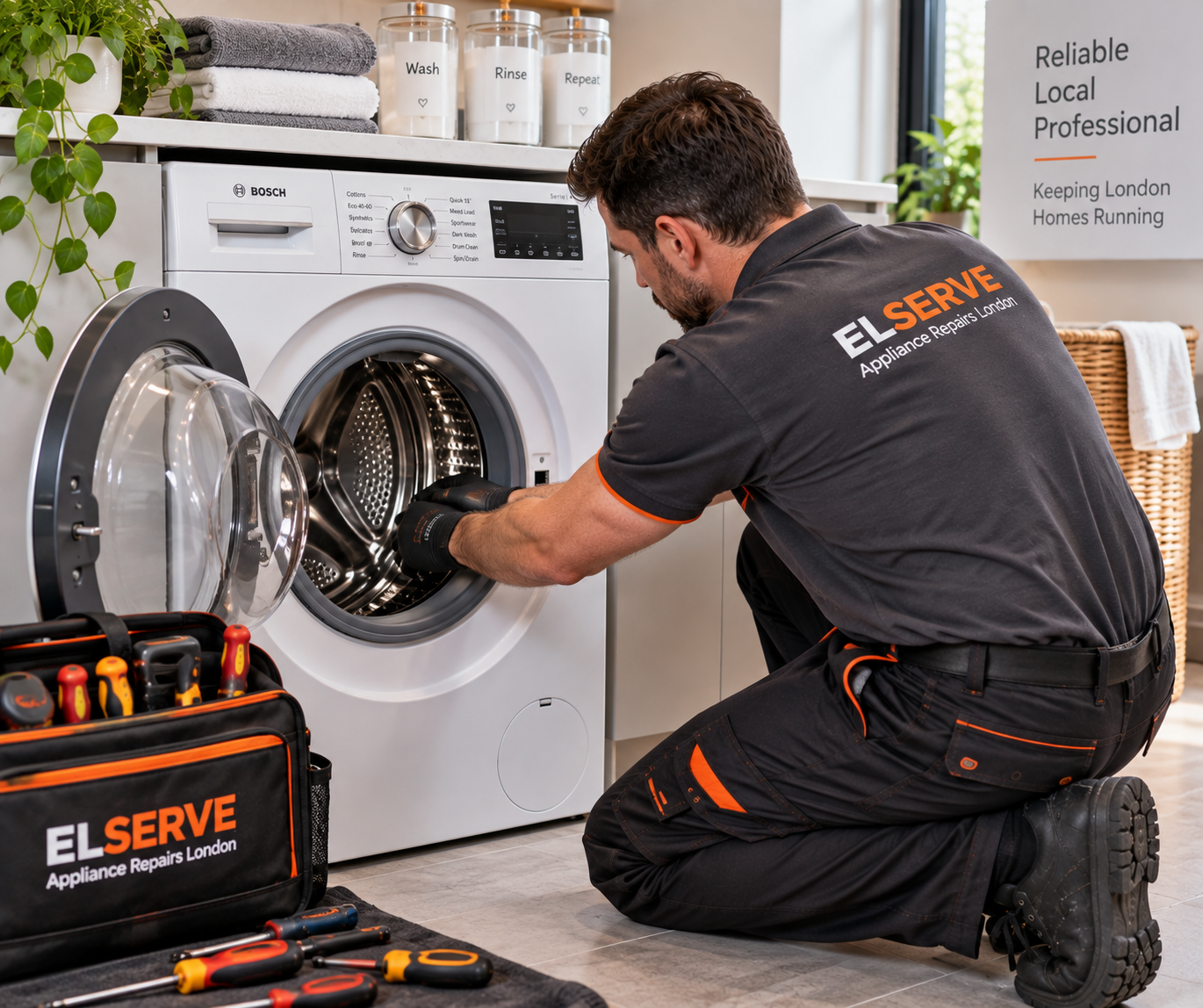
16 published articles | 3-month campaign
Elserve
Elserve, a Greater London domestic appliance repair provider, is a directly relevant example. Its historical three-month PR campaign developed editorial opportunities around household appliance expertise, including a Telegraph feature on dehumidifiers, air purifiers and humidifiers and Homebuilding & Renovating coverage of dehumidifier lifespan. The case study documents the specific editorial contributions rather than promising the same outcome or bookings for another repair business.
How much does Appliance Repair PR cost?
Standard PR supports wider business PR, including relevant expert commentary, founder stories, services or products and genuine announcements where appropriate. The monthly fee is £797 in the UK, US$997 in the US and CAD$1,497 in Canada. The initial commitment is three months, followed by one full billing cycle's notice.
Eligible individual experts who only need focused commentary outreach may consider the separate Expert Commentary PR service, currently £397 in the UK, US$497 in the US or CAD$747 in Canada per month. It is not a cheaper substitute for a wider company, service or product campaign. UK clients are serviced by our London team and US clients by our New York team; we also support suitable Canadian clients.
Useful guides for home-service businesses
-

How much does PR cost for home service businesses?
-
How can home service businesses become newsworthy without a launch?
-

Can PR help home service businesses win local customers?
Still Have Questions? We’ve Got You
-
We identify credible media angles, research relevant journalists, draft and pitch expert contributions or wider stories and follow up. The work depends on the service selected and your genuine expertise.
-
It can help communicate the value of repair expertise and the circumstances in which repair might be appropriate. It cannot promise that every repair is cheaper, greener or preferable to buying new.
-
Yes, when their experience fits the subject. National credibility may help local trust, but does not extend their service area or guarantee bookings.
-
No. Editors decide what to publish. We research, pitch and follow up, and report genuine editorial outcomes. We cannot guarantee coverage, backlinks, rankings or new business.
-
Standard PR is £797 per month in the UK, US$997 in the US and CAD$1,497 in Canada, with a three-month initial commitment and one full billing cycle's notice thereafter. Eligible individual experts seeking only commentary may consider Expert Commentary PR at £397, US$497 or CAD$747 per month, subject to suitability.
-
The appliance categories and brands you genuinely service, training and authorisations, geographical coverage, warranty arrangements and any properly anonymised repair data.
Want more detail?
You can read our full FAQs for more information on how we work, reporting, approvals, AI, media contacts and what to expect from earned coverage.
Discuss your PR campaign
Tell us about your business, expertise, location and objectives.
We will assess which subjects have realistic editorial potential and whether an existing Fair PR service is a good fit.
We cannot promise a particular publication or volume of coverage.